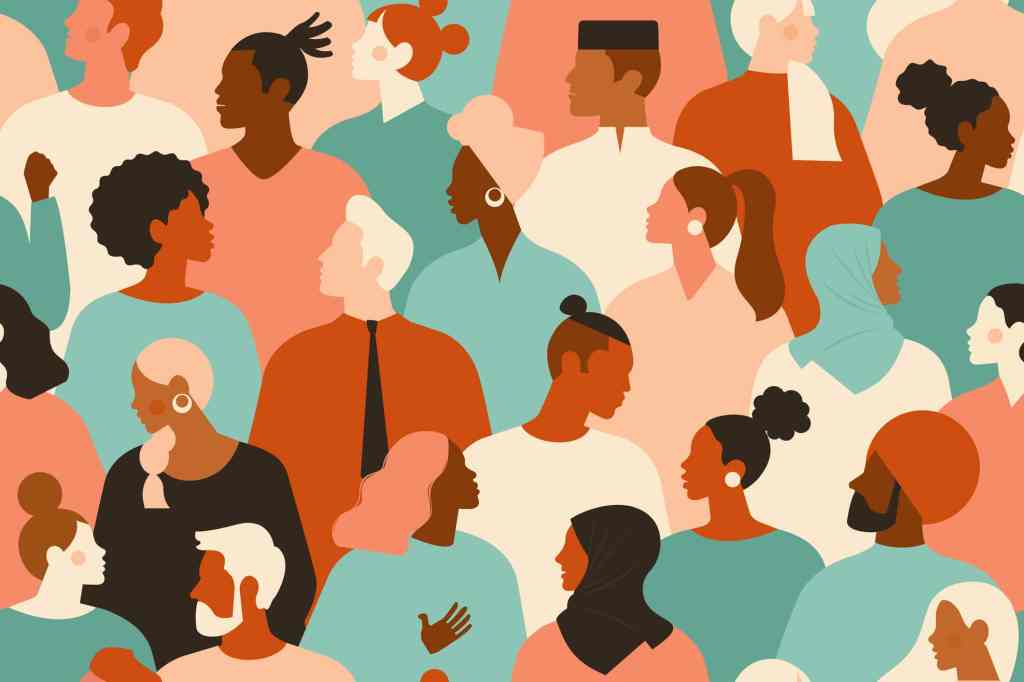
I can barely wrap my mind around the concept of a monocultural Australia. The impact on Victoria, Australia’s most multicultural state, and Brunswick with its proud postwar heritage, is hard to imagine.
But we shouldn’t ignore the pressures and factors that have led us to this point. What are the pain points? How do we engage in this debate productively? How do we engage in civic debate about global issues and globalisation itself? We want the benefits that high social cohesion brings, so how do we get them?
We are overdue for debates about:
- The true impacts, and what is being done to mitigate, urban congestion and labour shortages
- Dealing with genuine community conflicts about geopolitical issues
- Embracing Australian values of the past and linking them with the values of now
- Social isolation and lack of connectedness, fuelled by economic uncertainty, economic inequality, digital-first human relationships and the erosion of traditional civic forums
- Attitudes to, and experience of, racial discrimination
- Looking back at our history and coming to terms with what has happened to get us here
The sooner we scrap Harmony Day, the better. We need leaders to talk about real, substantive issues.
A shift from multiculturalism to monoculturalism would fundamentally alter Victoria’s demographic, economic, and cultural landscape. As Australia’s most culturally diverse state, Victoria would experience disproportionate impacts across several key sectors. [1]
Economic Impact
- Labor Shortages: Victoria relies heavily on net overseas migration to sustain its workforce. A monocultural policy would restrict immigration, leading to immediate labor deficits in health care, aged care, agriculture, and construction. [2]
- International Education Collapse: International education is one of Victoria’s largest export earners, centered heavily around Melbourne. Mandating a monocultural society would drastically reduce international student enrollment, threatening university funding and local student services. [3, 4]
- Reduced Economic Growth: Slower population growth translates directly to reduced consumer spending, lower housing demand, and stagnant state gross product (GSP).
Social and Demographic Changes
- Accelerated Aging Population: Without steady immigration of younger working-age individuals, Victoria’s median age would rise rapidly, straining the state’s healthcare system and tax base.
- Loss of Cultural Enclaves: Iconic multicultural hubs like Springvale (Vietnamese/Cambodian), Box Hill (Chinese), and Brunswick (Italian/Greek/Middle Eastern) would lose their distinct cultural footprints over time due to assimilation pressures. [5]
- Social Cohesion Strain: The transition period would likely trigger heightened social friction, community displacement, and a decline in institutional trust among existing minority populations.
Infrastructure and Urban Development
- Slowing Infrastructure Projects: Major ongoing transit and road projects (like the Suburban Rail Loop) would face severe delays and higher costs due to the contraction of the specialized migrant workforce.
- Housing Market Shifts: A sudden drop in population growth would cool housing demand, lowering rental yields and altering long-term urban planning and high-density development strategies in Melbourne.
Tourism and Global Reputation
- Decline in Global Appeal: Melbourne’s identity as a premier global city is built on its diverse culinary, arts, and festival scenes. A monocultural pivot would diminish its appeal to international tourists.
- Loss of Major Cultural Events: Festivals celebrating diversity, such as the Antipodes Festival or Lunar New Year celebrations, would lose state support and visibility, weakening the local hospitality economy. [6]
[1] https://www.slv.vic.gov.au
[4] https://www.mojonews.com.au
[6] https://greekherald.com.au
A shift to monoculturalism would completely reshape the State District of Brunswick, impacting its demographics, local economy, and political identity.
Demographic and Cultural Transformation
- Erosion of Migrant Heritage: Brunswick’s foundational Italian and Greek heritage, alongside its large Lebanese, Chinese, and Indian communities, would phase out under strict assimilation policies. [1]
- Loss of Cultural Hubs: The diverse restaurants, grocers, and specialty shops along Sydney Road would decline, replaced by homogenous retail options.
- Rapidly Aging Local Profile: Restricting younger, diverse arrivals would accelerate the aging of Brunswick’s population, increasing pressure on local services.
Economic and Housing Disruption
- Hospitality Workforce Crisis: Sydney Road’s famous culinary strip would face severe staff shortages without the migrant workers and international students who power local cafes and restaurants. [2, 3]
- Housing Market Cooling: Reduced population growth would sharply lower rental demand, impacting Brunswick’s high density apartment sector and slowing down new developments. [4]
- Creative Sector Decline: The local arts and live music scene, which thrives on diverse perspectives and subcultures, would lose its vibrant, multicultural foundation.
Political and Institutional Shifts
- Altered Electoral Dynamics: Brunswick is historically a progressive stronghold contested heavily by the Greens and Labor; a enforced shift toward monocultural conservatism could drastically alter local voting patterns. [5, 6]
- School Integration Changes: Highly multicultural local schools, such as Brunswick Secondary College, would see their student profiles shift toward a single cultural demographic, altering funding and language programs.
[2] https://www.nelsonalexander.com.au
[3] https://www.planning.vic.gov.au
Proponents of monoculturalism and assimilationist frameworks argue that a single, unified culture provides a distinct set of social and civic advantages. [1, 2]
Enhanced Social Cohesion and Trust
- High Interpersonal Trust: Sociological studies indicate that higher cultural homogeneity correlates strongly with elevated levels of baseline civic trust and mutual cooperation. [3]
- Shared Values and Expectations: A unified population reduces day-to-day cultural friction by ensuring community members share identical norms, traditions, and behavioral expectations. [2]
- Stronger Social Safety Nets: Homogeneous populations often report a higher willingness to support expansive welfare systems, driven by a stronger sense of shared identity and mutual obligation.
Political and Civic Efficiency
- Streamlined Decision Making: Government and local councils face fewer competing cultural interests, allowing for faster legislation and policy rollout. [4]
- Unified National Identity: A single overarching identity eliminates the complexities of balancing competing tribal or ethnic enclaves, resulting in a distinct, singular global brand. [1, 5]
- Simplified Legal Frameworks: Universal adherence to one set of culturally derived legal and ethical standards avoids conflicts surrounding religious exemptions or parallel community legal structures. [2, 5]
Economic and Public Simplicity
- Reduced Integration Costs: Budgets previously allocated to multi-language translation services, specialized ethnic grants, and migrant integration programs can be redirected into core public infrastructure.
- Predictable Housing Infrastructure: Lowered, predictable population growth rates allow city planners to manage housing development and public transport projects with greater long-term stability.
A shift toward monoculturalism would have a profound, disruptive impact on multicultural communities, directly altering their legal status, psychological well-being, and daily lives. [1, 2]
Loss of Cultural Identity and Heritage
- Enforced Assimilation: Communities would face intense pressure to abandon their distinct traditions, languages, and religious practices to conform to a single dominant culture. [3, 4]
- Erasure of Language: Public funding for community language schools, multilingual media (like SBS), and translation services would cease, leading to a rapid decline in heritage languages among younger generations. [5]
- Closure of Cultural Institutions: Places of worship, community centres, and ethnic clubs would likely lose their status, funding, or legal protections, forcing them to close.
Social and Psychological Impact
- Marginalisation and Exclusion: Members of minority groups would experience a sharp increase in social alienation, feeling like second-class citizens in their own homes. [6]
- Increased Discrimination: The political shift would likely validate and increase overt racism, systemic discrimination, and social hostility toward visibly diverse individuals. [7]
- Mental Health Strain: The pressure to suppress one’s identity, combined with a loss of community support networks, would lead to heightened anxiety, depression, and trauma. [8]
Economic and Legal Vulnerability
- Employment Barriers: Without diversity quotas or anti-discrimination protections, minority communities would face significant hurdles in hiring, promotion, and workplace safety. [9, 10, 11]
- Legal and Civic Disenfranchisement: Immigration restrictions and changes to citizenship laws could leave many long-term residents with insecure visa statuses or reduced civic rights.
- Disruption of Family Networks: Strict limits on family reunion visas would permanently separate families, cutting off vital emotional and financial support systems.
Impact on Community Safety
- Loss of Safe Spaces: Suburbs known as cultural sanctuaries would see their community networks fragment as residents disperse or hide their cultural backgrounds.
- Reduced Institutional Trust: A breakdown in trust between multicultural communities and institutions like the police or judiciary would lead to underreporting of crimes and lower civic participation. [12]
[2] https://www.sciencedirect.com
[5] https://www.multiculturalaustralia.edu.au
[6] https://onlinelibrary.wiley.com
[8] https://www.laraclaymantherapy.com
[9] https://www.reflektive.com
[10] https://www.gov.scot
[11] https://www.oecd.org
Australia’s cultural landscape contains several complex friction points. Recent data from the Lowy Institute and the Scanlon Foundation Research Institute show that while baseline support for diversity remains widespread, economic pressures and geopolitical events have intensified existing community divisions. [1, 2]
1. The Cost-of-Living and Immigration Intersect
- Housing and Infrastructure Strains: Intense economic pressure has linked immigration directly to the housing crisis. Polling shows a significant rise in Australians viewing immigration intake as too high (jumping to 55%), fueling friction between long-term residents and new arrivals over competing for scarce rentals and infrastructure. [1, 3, 4, 5]
- The Wealth-Cohesion Gap: Financial hardship acts as a major wedge. Australians facing severe financial stress report a significantly lower sense of social belonging (33%) compared to those who are financially comfortable (58%), which reduces overall patience for and engagement with multicultural initiatives. [6, 7]
2. Geopolitical Spillover and Religious Tensions
- Middle East Conflict Reactions: Ongoing international conflicts have directly triggered domestic friction, leading to a measurable rise in local Islamophobia and antisemitism. Communities are increasingly polarized by competing political narratives, placing major strain on multi-faith local council networks. [8, 9]
- Shifting Acceptance Vectors: The Mapping Social Cohesion report flags targeted increases in social negativity directed toward specific non-Christian communities, including Muslim, Jewish, Hindu, and Sikh groups. [10]
3. Corporate Culture and the “Bamboo Ceiling”
- Ambition vs. Promotion Gaps: Workplace dynamics present hidden structural friction. More than half (55%) of Culturally and Linguistically Diverse (CALD) women aim for professional advancement, yet standard corporate networks frequently fail to sponsor them into leadership roles. [11]
- The “Mate” Network Dynamic: Subtle corporate expectations around self-advocacy clash with traditional Australian norms like “Tall Poppy Syndrome” and informal, relationship-driven “mate” networks. This creates invisible career barriers for individuals from high-context, hierarchical cultures. [12]
4. Generational and Regional Disconnection
- Younger Demographic Isolation: Gen Z and Millennials report a steep, historic decline in their sense of national belonging (dropping to just over 30%). Financial alienation, climate concern, and loneliness isolate younger generations from the traditional “egalitarian” narrative championed by older, asset-wealthy cohorts. [6, 13]
- Digital Outrage Chambers: Rapid information loops and social media algorithms amplify domestic incidents into large-scale cultural debates, splitting public discourse into rigid, less tolerant factions. [14]
[1] https://www.communitydirectors.com.au
[2] https://www.theguardian.com
[3] https://theconversation.com
[4] https://www.dailytelegraph.com.au
[8] https://scanloninstitute.org.au
[9] https://www.cliffsnotes.com
[11] https://womensagenda.com.au
[12] https://www.syncskills.com.au
[13] https://culturalatlas.sbs.com.au
Resolving cultural friction points in Australia requires structural economic reform, intentional community design, and targeted institutional changes. Data from organisations like the Scanlon Foundation Research Institute and The Australian Intercultural Society outline specific, actionable interventions. [1, 2]
1. De-linking Housing and Immigration Strains
- Targeted Infrastructure Funding: Federal and state governments can tie infrastructure spending directly to localized migration intakes. Building schools, hospitals, and transport links ahead of population growth prevents communities from feeling like public services are failing due to new arrivals.
- Affordable Housing Pipelines: Rapidly scaling up social and affordable housing projects reduces direct competition in the private rental market. This dampens the cost-of-living anxiety that frequently fuels resentment toward immigrants. [3, 4]
2. Community-Led Intercultural Spaces
- Contact-Theory Programs: Local councils can support Scanlon Foundation Annual Community Grants to fund high-interaction community projects. Bringing diverse groups together around shared pragmatic goals—such as community gardens, sporting clubs, or local disaster relief—statistically increases neighborhood trust. [5]
- Neutral Interfaith Mediation: Establishing permanent local council roundtables with multi-faith and secular leaders creates an immediate, operational circuit-breaker when geopolitical conflicts flare abroad, preventing international divisions from fracturing domestic neighborhoods.
3. Dismantling the “Bamboo Ceiling”
- De-Identified Recruitment Protocols: Requiring public and private sector employers to anonymize job applications (removing names, photos, and non-essential geographic data) removes proven unconscious biases against non-Anglo applicants during initial hiring rounds. [6, 7]
- Formal Sponsorship Networks: Corporations can implement intentional mentorship and career sponsorship pathways. These programs actively connect Culturally and Linguistically Diverse (CALD) workers—particularly CALD women—with executive-level networks, bypassing informal relationship barriers. [8]
4. Re-engaging Disconnected Youth
- Civic Inclusion Initiatives: Creating targeted civic youth programs addressing financial literacy, affordable housing, and mental health helps combat the high rates of isolation reported by younger generations. [3, 4]
- Digital Literacy Campaigns: Government funding can back anti-polarisation strategies online, equipping younger social media users to spot algorithmic outrage loops that seek to magnify domestic cultural incidents into hyper-partisan flashpoints. [9]
[1] https://scanloninstitute.org.au
[2] https://intercultural.org.au
[5] https://www.scanlonfoundation.org.au
[7] https://blog.hiringthing.com
[8] https://www.evolves.com.au
[9] https://theconversation.com
In Australia, social cohesion is tracked using a mix of subjective community surveys and objective socioeconomic data. The gold standard for measuring these dynamics is the Scanlon-Monash Index (SMI) of Social Cohesion, formulated by the Scanlon Foundation Research Institute. [1, 2, 3, 4, 5]
The index monitors social health across five core pillars, utilizing distinct success metrics for each. [1]
1. Belonging
This pillar tracks how deeply connected people feel to the wider community and nation. [1]
- Pride in Nation: The percentage of people reporting a strong sense of pride in Australian life, culture, and achievements.
- Local Connectedness: The proportion of residents who feel a sense of belonging within their immediate neighborhood or local government area. [1, 6]
2. Worth
This monitors the emotional, financial, and material well-being of the population. [1]
- Life Satisfaction: Quantitative scoring of individual happiness and optimism regarding the future.
- Financial Security: The percentage of the population reporting adequate material conditions, stable employment, and low cost-of-living stress. [1, 7, 8]
3. Social Inclusion and Justice
This measures public perceptions of fairness, equity, and institutional trust. [1]
- Trust in Institutions: Tracking the proportion of people who express confidence in key democratic fixtures, including the national government, the police, public services, and the healthcare system. [9, 10]
- Perceived Economic Fairness: Surveying whether people believe the gap between the rich and poor is reasonable or if the economic system is inherently unfair. [1]
4. Participation
This tracks active civic, political, and social involvement. [1]
- Civic Engagement: Voluntary participation levels in elections, community groups, local councils, or peaceful political action.
- Social Connections: Regularity of volunteering, participation in local cultural events, and rates of self-reported loneliness. [1, 9, 11, 12]
5. Acceptance and Rejection
This directly quantifies community attitudes toward diversity and minority groups. [1]
- Experience of Discrimination: The percentage of individuals reporting verbal abuse, exclusion, or physical targeted attacks based on their skin color, ethnic origin, or religion over the past 12 months. [1, 8]
- Attitudes to Migration: Public support for multiculturalism, tracked by indicators such as the percentage of Australians who agree that multiculturalism is good for the country. [8, 13]
Interactive Frameworks & Local Tracking
To apply these metrics regionally, organizations use specific systems like the Social Cohesion Compass, an interactive tool that blends Scanlon data with Australian Bureau of Statistics (ABS) census statistics. This allows policymakers to assess localized cohesion deficits or strengths down to specific local government areas. [14]
[1] https://scanloninstitute.org.au
[2] https://www.homeaffairs.gov.au
[3] https://scanloninstitute.org.au
[5] https://scanloninstitute.org.au
[6] https://aci.scanloninstitute.org.au
[7] https://scanloninstitute.org.au
[8] https://scanloninstitute.org.au
[11] https://www.swoopanalytics.com
Pre-Federation: Global Influx and Colonial Exclusion (Pre-1901)
- Pre-1788: Long-standing trade, linguistic, and cultural exchange occurs between Indigenous Nations of Northern Australia and Makassan traders from modern-day Indonesia [aph.gov.au]. [1]
- 1788: British colonization begins, introducing Anglo-Celtic institutions and displacing over 250 distinct First Nations language groups [racismnoway.com.au]. [2, 3, 4]
- 1830s: German Lutherans establish the first major non-British European agricultural settlements in South Australia. [5]
- 1851: The Gold Rushes trigger an influx of tens of thousands of Chinese, European, and American miners, creating Australia’s first major global demographic mix [sevozdowski.com]. [6]
- 1855: Victoria passes the Chinese Immigration Act, introducing entry taxes and shipping quotas to deter non-European arrivals. [7, 8, 9, 10]
- 1861: The Lambing Flat Riots occur in New South Wales, marking a violent peak of anti-Chinese sentiment on the goldfields. [11, 12, 13]
- 1888: All six Australian colonies harmonize their laws to uniformly restrict Asian immigration. [14]
The Assimilation Era: The White Australia Framework (1901–1945) [15, 16, 17]
- 1901: The newly federated Commonwealth passes the Immigration Restriction Act 1901 as its first major legislative act, establishing the White Australia policy [ames.net.au]. [18, 19, 20]
- 1901: The Pacific Island Labourers Act orders the deportation of thousands of Pacific Islander workers, prioritizing a white labor market. [21, 22]
- 1920s: Strict assimilation expectations mandate that any non-British arrivals completely hide their heritage and blend into the Anglo-Celtic monoculture [homeaffairs.gov.au].
The Post-War Pivot: Mass Immigration Begins (1945–1972) [23]
- 1945: The Chifley Government establishes the Department of Immigration, launching the “Populate or Perish” campaign to rapidly boost the national workforce.
- 1947: Australia signs an agreement with the International Refugee Organization to accept displaced Eastern European populations, widening immigration beyond Great Britain.
- 1950s: Large waves of Italian, Greek, Maltese, and Dutch migrants arrive, fundamentally altering the urban fabric of Melbourne and Sydney.
- 1966: The Holt Liberal Government begins actively dismantling the White Australia policy by easing visa restrictions on non-European and highly skilled Asian migrants [ames.net.au]. [24, 25, 26, 27, 28]
The Policy Architecture of Multiculturalism (1973–1989) [29]
- 1973: The Whitlam Labor Government formally abolishes the final remnants of the White Australia Policy [homeaffairs.gov.au].
- 1973: Immigration Minister Al Grassby launches the landmark policy paper “A Multi-Cultural Society for the Future,” marking the first official use of the term in government.
- 1975: The Racial Discrimination Act 1975 is enacted, legally banning discrimination based on race, color, or descent [ames.net.au].
- 1975–1979: The Fraser Liberal Government accepts thousands of Vietnamese refugees following the end of the Vietnam War, marking Australia’s first major wave of Asian migration.
- 1978: The landmark Galbally Report recommends that the government actively fund migrant cultural preservation and settlement services [homeaffairs.gov.au].
- 1979: The Special Broadcasting Service (SBS) is established to provide multilingual radio and television programming across the country.
- 1989: The Hawke Government releases the National Agenda for a Multicultural Australia, explicitly framing diversity as a core economic and structural asset [homeaffairs.gov.au]. [30, 31, 32, 33, 34]
Civic Integration and Modern Dynamics (1990s–Present)
- 1996: The “Blainey Debate” and the rise of the One Nation party push multiculturalism into a period of intense public and political debate.
- 2001: The Howard Government shifts public policy focus toward “citizenship” and shared civic responsibility rather than cultural distinctiveness.
- 2007: A formal Australian Citizenship Test is introduced to evaluate applicants’ English language proficiency and knowledge of national values.
- 2010s: Skilled migration and international education intake soar, with China and India becoming the primary source nations for permanent migration.
- 2020s: Economic constraints, housing pressures, and geopolitical conflicts shift social cohesion tracking, highlighting new friction points around infrastructure and religious polarization [scanloninstitute.org.au, theguardian.com]. [35, 36, 37, 38, 39]
[5] https://sahistoryhub.history.sa.gov.au
[9] https://origins.museumsvictoria.com.au
[10] https://collections.museumsvictoria.com.au
[11] https://education.nsw.gov.au
[12] https://www.britannica.com
[14] https://chineseaustralia.org
[15] https://collections.museumsvictoria.com.au
[16] https://press-files.anu.edu.au
[17] https://www.sciencedirect.com
[20] https://www.australianheritage.au
[23] https://testbook.com
[24] https://www.homeaffairs.gov.au
[25] https://www.superprof.com.au
[26] https://unsworks.unsw.edu.au
[27] https://www.homeaffairs.gov.au
[28] https://www.superprof.com.au
[29] https://www.sciencedirect.com
[31] https://cambridgeblog.org
[32] https://www.homeaffairs.gov.au
[35] https://www.tandfonline.com
[36] https://link.springer.com
[37] https://onlinelibrary.wiley.com


Leave a Reply