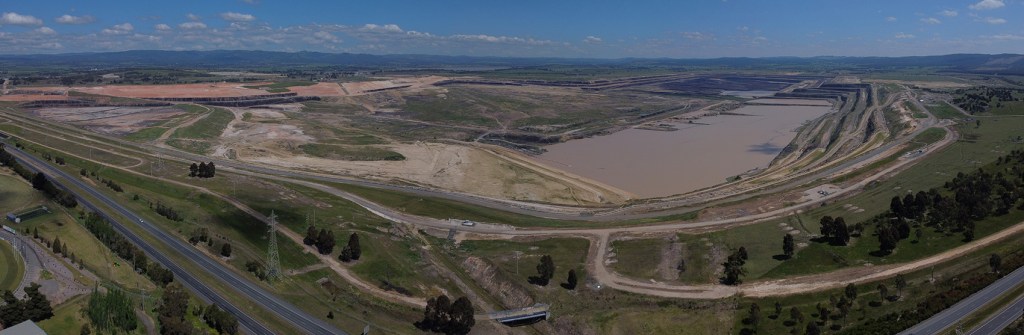
Supporting a Just and Responsible Transition in the Latrobe Valley
- Provide substantial community transition funding:
The Latrobe Valley needs sustained government investment to support workers, local businesses and community services affected by power station closures and industrial change. A just transition requires funding that creates new jobs, strengthens local economies and helps communities adapt to the shift away from coal-fired energy. - Ensure responsible mine rehabilitation:
The State Government must reject low-cost rehabilitation proposals that could leave long-term environmental risks for the community. Mine rehabilitation should prioritise groundwater protection, environmental sustainability, land stability and public safety, with strong oversight and full accountability from mining companies for long-term outcomes.
The Latrobe Valley communities of Traralgon, Moe, Morwell and Churchill have long powered Victoria’s economy. Today, they stand at the frontline of profound structural change driven by energy privatisation, the closure of the Hazelwood power station, and the impending shutdowns of Yallourn and Loy Yang. Alongside these changes, the region has absorbed further economic shocks, including the closure of the Briquette Factory, while key industries such as the Maryvale paper mill continue to navigate major transitions.
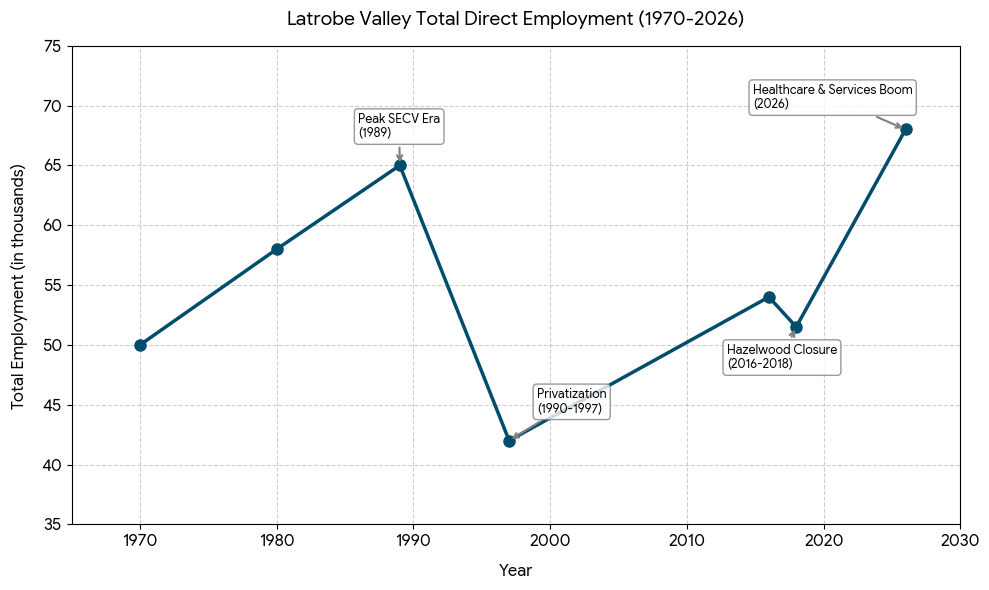
For communities of this scale, the impacts of industrial closure and privatisation are not abstract—they are immediate, deeply felt, and far-reaching. Job losses ripple through local economies, eroding business confidence, straining essential services, and undermining social cohesion. A just transition is not optional; it requires deliberate, sustained investment. Government must provide strong, coordinated support for workers, businesses and community services to ensure the region not only survives, but thrives in a changing energy landscape.
At the same time, decisions made today about mine rehabilitation will shape the region’s environmental and economic future for generations. The priority must be to deliver the right outcomes—not simply the cheapest ones. Short-term, cost-driven proposals, such as those advanced by Engie, risk long-term environmental burdens onto the public. In particular, inadequate rehabilitation threatens the integrity of the state’s water systems, with potentially irreversible consequences.
The State Government must act decisively to reject substandard rehabilitation approaches and mandate solutions that prioritise environmental sustainability, hydrological stability, and community safety. This includes enforcing higher rehabilitation standards, ensuring transparent oversight, and holding companies fully accountable for long-term outcomes.
The closure of Hazelwood in 2017 and the planned closure of Yallourn in 2028 illustrate the dual nature of the energy transition. While these closures deliver critical reductions in greenhouse gas emissions and harmful pollutants, they also introduce significant long-term risks—particularly around groundwater systems, contamination, and land stability. Managing this trade-off responsibly is a core obligation of government.
The Latrobe Valley deserves a future that is both economically secure and environmentally sound. Achieving this requires bold leadership, genuine partnership with local communities, and a commitment to long-term public interest over short-term savings.
Google backgrounder
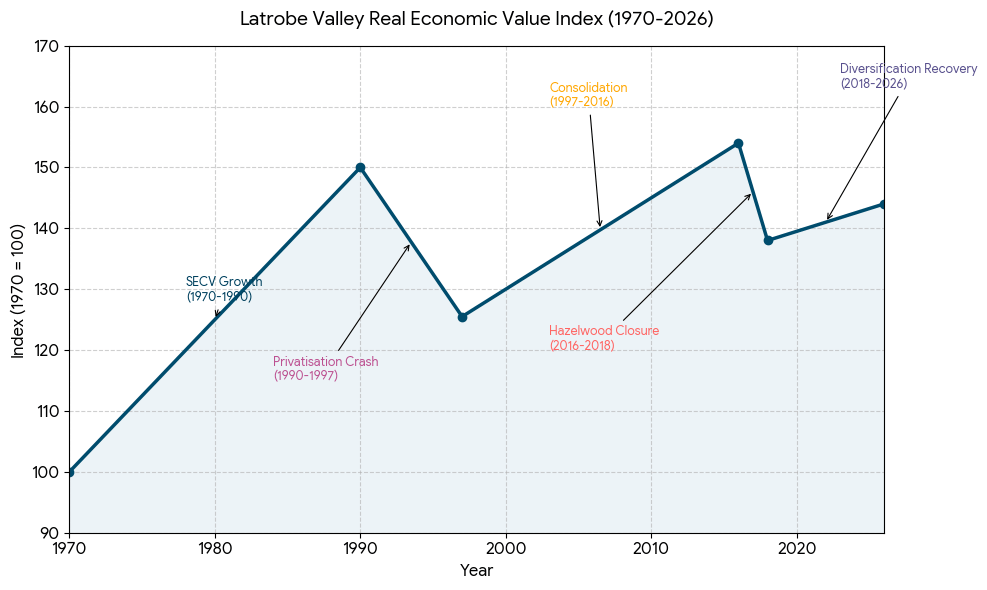
The history of the Latrobe Valley is the history of Victoria’s industrialisation. For over a century, the region’s vast brown coal (lignite) reserves have been the backbone of the state’s electricity grid.
🏗️ The Early Era (1880s – 1920s)
- 1880s: Brown coal is first discovered in the Valley.
- 1890s: Small-scale mining begins at the Old Morwell Open Cut.
- 1921: The State Electricity Commission of Victoria (SECV) is established under Sir John Monash to end Victoria’s reliance on NSW black coal.
- 1924: Yallourn Power Station begins operation, marking the start of large-scale power generation in the region.
⚡ The Expansion Years (1950s – 1980s)
- 1954: Morwell Power Station (and Briquette Factory) opens to support local industry and heating.
- 1964: Hazelwood Power Station begins commissioning. By 1971, it becomes the largest power station in the Southern Hemisphere.
- 1973: Yallourn W begins operations as the older Yallourn units are phased out.
- 1984: Loy Yang A starts generating power, introducing a new scale of efficiency and output to the grid.
📉 Privatisation & Transition (1990s – 2010s)
- 1994–1997: The Kennett Government privatises the SECV. The mines and power stations are sold to international private consortia.
- 2014: A massive, 45-day fire in the Hazelwood Mine causes significant health and environmental impacts, accelerating calls for closure.
- 2017: Hazelwood Power Station closes with only five months’ notice, removing 22% of Victoria’s power supply and sparking a major regional transition.
🌿 The Future (2020s – 2030s+)
- 2023: The State Government announces the revival of the SEC to drive renewable energy investment.
- 2028: Yallourn W is scheduled for closure (brought forward from 2032).
- 2035: Loy Yang A (the state’s largest remaining coal plant) is scheduled to close, marking the end of coal-fired power in Victoria.
🏛️ Current Status of the “Big Three”
| Station | Owner | Current Status | Closure Date |
|---|---|---|---|
| Hazelwood | Engie | Decommissioned | Closed 2017 |
| Yallourn W | EnergyAustralia | Operational | 2028 |
| Loy Yang A | AGL | Operational | 2035 |
🛠️ Post-Coal Opportunities
As the coal era ends, the Latrobe Valley is pivoting toward:
- Battery Storage: Large-scale batteries (like the Hazelwood Battery) are being built at old terminal stations.
- Carbon Capture (CCS): Projects like CarbonNet aim to use old gas/coal infrastructure for carbon storage.
- Offshore Wind: The Star of the South and other projects will connect into the Valley’s existing high-voltage transmission lines.
The rehabilitation of the Hazelwood mine is a massive undertaking, primarily focused on transforming the massive open-cut pit into a full-level lake. This plan is currently being executed by ENGIE (the site owner) with oversight from the Latrobe Valley Mine Rehabilitation Commissioner.
Below is a comparison of the key components of the current Full Lake plan versus the alternative Partial Fill/Dry scenarios that were previously considered.
🏗️ Hazelwood Mine Rehabilitation: Plan Comparison
| Feature | Current Preferred Plan (Full Lake) | Partial Fill (Wetland) | Dry Land (Landfill/Terracing) |
|---|---|---|---|
| Primary Goal | Fill the pit to the natural aquifer level (Full Lake). | Stable wetlands with exposed lower batters. | Permanent dry pit with extensive earthworks. |
| Water Requirement | ~638 billion litres (roughly 1.3x Sydney Harbour). | Moderate water for shallow wetlands. | Minimal (groundwater pumping only). |
| Stability Method | Water pressure used to balance aquifer pressure and prevent floor “heave.” | Mechanical weighting of the mine floor. | Massive earth-moving to buttress walls and floor. |
| Estimated Timeline | 2024–2045 (Filling takes ~20 years). | 15–20 years. | 25+ years (due to earthworks). |
| Fire Risk | Lowest: Exposed coal is completely submerged. | Moderate: Exposed coal requires capping. | High: Requires permanent maintenance of soil caps. |
| Future Use | Recreation, tourism, and floating solar. | Nature reserve and limited agriculture. | Industrial land or light grazing. |
🌊 Key Challenges of the Current Plan
1. Water Sourcing
The biggest hurdle is where the water comes from. ENGIE is currently seeking a water licence to use a mix of:
- Groundwater: Continuing current pumping to prevent floor heave.
- Surface Water: Diverting water from the Latrobe River system (highly contentious during drought).
- Alternative Water: Investigating recycled water or desalinated water.
2. Wall Stability
Until the water reaches a certain level, the “weight” of the water isn’t sufficient to hold back the earth.
- The Risk: Potential landslips or “heave” if the filling rate isn’t managed carefully.
- Monitoring: Extensive sensors and inclinometers are embedded in the batters near the Princes Freeway.
3. Water Quality
The lake must not become a “saline sink.”
- Planning: The final lake must be of a quality that supports aquatic life and doesn’t contaminate the surrounding groundwater.
🏛️ Regulatory Milestones (2026 Status)
- EES Process: The Environmental Effects Statement (EES) is the current governing process, with public hearings and technical assessments ongoing throughout 2025 and 2026.
- Traditional Owners: The Gunaikurnai Land and Waters Aboriginal Corporation (GLaWAC) is a key partner in ensuring the “re-greening” of the site respects cultural values.
🛡️ The Bottom Line: The Full Lake is seen as the only long-term way to ensure the mine doesn’t catch fire again and remains geotechnically stable without permanent, expensive pumping.
The Yallourn mine rehabilitation plan is unique because the Morwell River currently flows through the middle of the mine in a man-made diversion (the Morwell River Diversion).
The primary goal for EnergyAustralia is to create a safe, stable landform that can be handed back by 2032, following the station’s closure in 2028.
🏗️ Yallourn Mine Rehabilitation: Plan Comparison
| Feature | Preferred Plan (Lake & River) | Alternative (Dry Land / Capping) | Full Backfill (Soil) |
|---|---|---|---|
| Concept | Re-align the Morwell River into a new lake. | Cap coal with soil and pump water forever. | Fill the pit entirely with dirt/overburden. |
| Stability | Water weight balances the floor pressure. | Requires permanent active pumping. | Mechanical weight of soil provides stability. |
| Morwell River | Integrated into the final water body. | Remains in its current concrete diversion. | Diverted back to a “natural” surface path. |
| Fire Risk | Low: Most coal is submerged. | Moderate: Relies on soil cap integrity. | Minimal: Coal is buried deep. |
| Timeline | Fill starts 2028; stable by ~2040. | 10–15 years for capping. | 50+ years (too much soil required). |
| Cost | High (infrastructure & water). | Moderate (but high long-term maintenance). | Extreme (prohibitive). |
🌊 Strategic Challenges for Yallourn
1. The Morwell River Diversion (MRD5)
The river currently sits in a “perched” channel above the mine floor.
- The Risk: If the channel fails (as it did in the 2012 floods), the mine floods uncontrollably.
- The Plan: The rehab plan involves a controlled flooding to equalise pressure, eventually making the river part of a permanent lake system.
2. Interaction with Hazelwood
Yallourn and Hazelwood share the same aquifer systems.
- The Problem: Pumping at one mine affects the stability of the other.
- Coordination: EnergyAustralia and ENGIE must coordinate their water-take and filling schedules to ensure the regional “water table” doesn’t collapse or surge too quickly.
3. Land Use
Because Yallourn is closer to the town of Moe, the community has high expectations for the site.
- Proposals: The “Lake Yallourn” concept includes recreational boating, wetlands, and potential aquaculture.
🏛️ Regulatory Status (2026)
- Closure Date: EnergyAustralia has committed to closing Yallourn in 2028.
- Approvals: The Rehabilitation Plan is currently under review by the Latrobe Valley Mine Rehabilitation Commissioner.
- Community Consultation: Ongoing focus on the “Master Plan” for the site, including how to connect the new lake to the existing Township of Yallourn North.
🛡️ Key Difference from Hazelwood: While Hazelwood is a “disconnected” pit, Yallourn is a “river-connected” pit. This makes the environmental water quality of the final lake much more critical, as it eventually flows back into the Latrobe River system and down to the Gippsland Lakes.
The environmental impacts of the Hazelwood (closed 2017) and Yallourn (closing 2028) closures are defined by a trade-off: a massive reduction in greenhouse gas emissions and toxic pollutants versus the long-term hydrological and contamination risks of mine rehabilitation. [1, 2]
🌿 Direct Environmental Comparison
| Impact Area [3, 4, 5, 6, 7] | Hazelwood (2017 Closure) | Yallourn (2028 Closure) |
|---|---|---|
| Emissions Reduction | Removed 16M tonnes of CO2/year (14% of VIC’s total emissions). | Will remove approx. 13M tonnes of CO2/year. |
| Air Quality | Eliminated Australia’s largest source of PM2.5 and dioxins. | Will eliminate a major source of mercury and particulate matter. |
| Water Consumption | Saved 27 billion litres/year previously used for cooling. | Will free up significant water entitlements for environmental flows. |
| Contamination Risk | Significant focus on the Hazelwood Ash Retainment Area (HARA) leaching into groundwater. | Concerns over coal ash and the stability of the Morwell River Diversion (MRD). |
💧 Hydrological Impacts (The “Gippsland Lakes” Problem)
The most critical environmental challenge for both sites is the water demand for filling the mine pits to create stable “pit lakes.”
- Catchment Hydrology: Environmental groups like Environment Victoria warn that filling these two massive pits simultaneously could divert a catastrophic amount of water from the Latrobe River.
- Gippsland Lakes: Reduction in downstream “flood-skimming” flows could increase salinity and disrupt the ecology of the Ramsar-listed Gippsland Lakes.
- The Yallourn River Issue: Unlike Hazelwood, Yallourn involves the Morwell River. If the current man-made diversion collapses during the fill, it could lead to uncontrolled flooding and massive sediment transport. [8, 9]
⚠️ Legacy Contamination Gaps
Both closures face “legacy” gaps—environmental problems created during decades of operation that are only now being fully assessed.
- Coal Ash Leaching: At Hazelwood, the Environment Protection Authority (EPA) has issued fines for groundwater contamination related to its ash dumps. There is a risk that “flooding the pit” will mobilise these toxins into the local water table.
- Progressive Rehabilitation: Yallourn has already completed over 1,500 hectares of progressive rehabilitation, reducing its current dust and fire risk compared to the “cliff-edge” closure Hazelwood experienced in 2017.
- Fire Resilience: Submerging the coal in a lake (the current plan for both) is the most effective way to prevent a repeat of the 2014 Hazelwood Mine Fire, which was a major regional environmental disaster. [10, 11]
📍 Key Takeaway: While the closure is an environmental win for air and climate, the rehabilitation is a decades-long risk for the state’s water systems.
[1] https://www.latrobe.vic.gov.au
[2] https://envirojustice.org.au
[3] https://www.latrobe.vic.gov.au
[4] https://environmentvictoria.org.au
[5] https://nexteconomy.com.au
[6] https://environmentvictoria.org.au
[7] https://environmentvictoria.org.au
[8] https://environmentvictoria.org.au
[9] https://environmentvictoria.org.au
[10] https://environmentvictoria.org.au
[11] https://nexteconomy.com.au
Leading environmental advocacy groups—including Environmental Justice Australia (EJA), Environment Victoria, and the Concerned Waterways Alliance—unanimously oppose Engie’s current proposal to flood the Hazelwood mine pit without extensive remediation. They view this first major closure as a critical precedent for the remaining Latrobe Valley mines. [1, 2, 3, 4, 5]
Instead, environmentalists recommend a strict, science-backed framework focused on complete pollution removal and water system protection: [3, 6]
1. Mandatory Source Removal of Toxic Coal Ash [7]
- Recommendation: Excavate and relocate all toxic coal ash completely out of the pit to secure, lined, above-ground landfills.
- The Reason: Engie’s current plan is to simply cap the ash dump with clay or concrete and submerge it under the lake. Environmentalists and independent experts argue that submerging the ash will allow highly toxic heavy metals (arsenic, mercury, chromium) and PFAS to perpetually leach into the regional groundwater and local river systems. [3, 8, 9, 10, 11]
2. A “User Pays” Penalty for Regional Water Use
- Recommendation: Force coal companies to pay commercial market rates for every megalitre of water used in rehabilitation.
- The Reason: Environmentalists successfully campaigned for this policy framework during AGL’s recent water application for the Loy Yang mine, establishing a price of $230 per megalitre. They argue that forcing Engie to pay for water will financially disincentivize them from draining the Latrobe River system and encourage the use of alternative water sources. [3, 12, 13, 14]
3. Protection of Downstream Environmental Flows
- Recommendation: Prohibit the diversion of pristine river water into the mine pit during dry seasons.
- The Reason: Taking 637 gigalitres of water to fill the pit will devastate downstream river health and starve the Ramsar-listed Gippsland Lakes of fresh inflows, drastically accelerating ecosystem salinisation and biodiversity loss. [1, 8, 9, 15, 16]
4. Prioritising the “Dry Pit” or Terrestrial Landform Alternative
- Recommendation: Shift focus away from a deep lake toward a partially filled or completely dry, terraced landform.
- The Reason: Rather than creating a massive, potentially acidic, or toxic lake body, environmentalists recommend flattening the steep mine walls (batters), capping the exposed coal with clean topsoil, and extensively revegetating the site with native flora. This method transforms the space into a safe terrestrial bushland park while preserving regional water security. [9, 17, 18, 19]
Summary of Environmentalists’ Stance
| Current Engie Proposal [2, 3, 8, 14, 15, 17, 18] | Environmentalist Counter-Recommendation |
|---|---|
| Cap-and-submerge the internal coal ash dam. | Complete excavation and heavy industrial waste extraction. |
| Use cheap or free surface water from natural rivers. | Charge $230+ per megalitre to protect natural catchments. |
| Connect the lake to the Morwell and Latrobe Rivers. | Keep the site strictly isolated (unconnected) or dry. |
[1] https://concernedwaterwaysalliance.org
[2] https://envirojustice.org.au
[3] https://envirojustice.org.au
[4] https://environmentvictoria.org.au
[5] https://environmentvictoria.org.au
[6] https://concernedwaterwaysalliance.org
[7] https://envirojustice.org.au
[9] https://environmentvictoria.org.au
[11] https://envirojustice.org.au
[12] https://environmentvictoria.org.au
[14] https://envirojustice.org.au
[15] https://www.planning.vic.gov.au
[16] https://www.kidsnews.com.au
[17] https://www.hazelwoodrehabilitation.com.au
[18] https://papers.acg.uwa.edu.au
[19] https://envirojustice.org.au


Leave a Reply