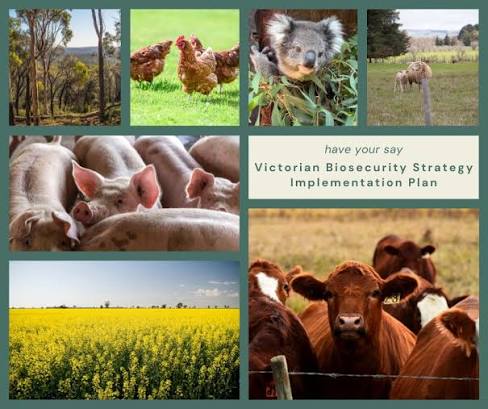
Biosecurity Victoria has warned of increasing threats from exotic pest plants and animal disease outbreaks, creating new challenges for the state’s agricultural industries, environment and regional communities.
Queensland and New South Wales implemented consolidated biosecurity frameworks more than a decade ago, allowing businesses, landholders and government agencies time to adapt to a shared responsibility model. Victoria’s delayed introduction of the General Biosecurity Duty (GBD) means many Victorian businesses now face regulatory change and compliance costs that interstate competitors have already absorbed.
While the current Government’s reforms rely heavily on the General Biosecurity Duty framework, concerns have been raised that the model shifts responsibility onto local councils, park managers and private landholders without providing sufficient resources or accountability mechanisms. This can create gaps in biosecurity protection where unmanaged land or roadside corridors become pathways for the spread of pests and diseases.
My priorities:
- Strengthen Victoria’s biosecurity system through a balanced partnership between government, industry, local councils and landholders.
- Restore and expand direct investment in frontline biosecurity surveillance, pest management and disease response capabilities.
- Ensure councils, public land managers and private landholders have access to adequate funding, guidance and support to meet their biosecurity obligations.
- Introduce clear accountability and compliance measures to ensure responsibilities are fairly shared and consistently enforced.
- Improve coordination across public and private land boundaries to reduce the risk of unmanaged biosecurity hotspots.
- Invest in early detection, rapid response and prevention programs to reduce the economic and environmental impacts of invasive species and animal diseases.
- Enhance protection for Victoria’s biodiversity and natural ecosystems by ensuring environmental outcomes are given equal consideration alongside agricultural and trade interests.
- Work closely with farming organisations, environmental groups and regional communities to develop practical, fair and effective biosecurity policies.
Victoria needs a biosecurity framework that is properly funded, clearly accountable and capable of responding to increasing threats from invasive species, animal diseases and climate-related risks. My policy will deliver a stronger, more coordinated approach that protects agriculture, biodiversity and regional communities while ensuring responsibilities are matched with the resources needed to succeed.
Google backgrounder
🪲 2. Escalating Biosecurity Incursions
Biosecurity Victoria warns that the state faces an unprecedented tempo of exotic pest plants and animal disease outbreaks. [19, 20]
- The Climate Inversion Trap: Warming seasonal baselines are actively expanding the geographic range of pests. Destructive invasive species are migrating further south into Victoria as winter frosts fail to kill off larval colonies. [20, 21]
- The Inbound Pressure Matrix: Agriculture Victoria has managed nearly 100 high-priority biosecurity incursions recently, spanning outbreaks of avian influenza (bird flu), varroa mite, and highly invasive weeds like water hyacinth. With the state’s food and fiber exports valued at over $14 billion, a single unchecked containment failure risks triggering immediate international market lockouts. [19, 20, 22, 23, 24]
- Feral Herbivore Degradation: Exploding populations of feral deer, pigs, and foxes across national parks are physically stripping native understories, exacerbating topsoil erosion, and fouling sensitive alpine peatlands. [3, 18, 25]
4. Biosecurity “Shared Responsibility” vs. Operational Reality
Victoria’s updated biosecurity policy settings rely heavily on the General Biosecurity Duty (GBD) framework, which legally mandates that everyone—from massive corporations to everyday smallholders—shares responsibility for threat containment.
- The Gap: Independent biosecurity reviews reveal that the state’s on-ground enforcement capacity has contracted significantly. While Biosecurity Victoria manages a high tempo of emergency incursions (including recent avian influenza and varroa mite containment lines), it relies on an increasingly thin network of regional field officers.
- The Criticism: Environmental and farming groups argue that “shared responsibility” has become code for the state government withdrawing its direct funding. By shifting the legal burden onto under-resourced local councils, understaffed park rangers, and private landholders, the state has created a highly fragmented defense network. A single unmonitored property or un-culled council roadside can easily act as an un-checked biosecurity vector, undermining millions of dollars in centralized containment efforts.
Biosecurity “Cost Recovery” Overrides
Under the updated Sustainable Biosecurity Funding guidelines, the state has shifted away from direct public funding for biosecurity containment. The machinery now heavily relies on matching industry fees, specific clearance charges, and enforcement of the General Biosecurity Duty (GBD), forcing private landholders and councils to pick up the bill for local pest and weed eradication. [13, 14]
🪲 3. Biosecurity “Shared Funding” Frameworks
Under the current machinery-of-government variations, direct public funding for Biosecurity Victoria has been restricted, forcing a heavy operational pivot onto Commonwealth matching funds and local fee structures: [6]
- The Cargo Modernisation Loop: Capital is prioritized for digital transitions via the Simplified Targeting and Enhanced Processing System (STEPS). The budget redirects administrative resources to automated cargo tracing arrays to accelerate border clearances. [6]
- The Land tenure Shift: On-ground landscape defense relies on matching industry levies and the enforcement of the General Biosecurity Duty (GBD), shifting the physical cost of localized pest animal and noxious weed eradication directly onto municipal council infrastructure budgets and private landholders.
🌾 Biosecurity Legislative Reforms
The Victorian Government is actively consolidating its fragmented agricultural and environmental protection laws—currently scattered across multiple Acts—into a singular, streamlined Biosecurity Act. [6, 7]
- General Biosecurity Duty (GBD): Agriculture Victoria is rolling out a statutory General Biosecurity Duty modelled after the Environment Protection Authority’s (EPA) general environmental duty. This legally requires individuals and businesses to take all reasonable steps to prevent, minimise, or eliminate biosecurity risks. [1, 8, 9, 10, 11]
- Traceability and Data Overhauls: Key proposals focus on improving data quality within the Property Identification Codes (PICs) system for livestock and updating plant tracking under new Plant Biosecurity Regulations to manage rapidly evolving threats like bird flu, varroa mite, and fire ants. [1, 4, 12]
- Equal Environmental Weighting: Backed by advocacy from the Invasive Species Council, credible proposals demand that the new Act elevate environmental biosecurity (protecting native parks and marine life from weeds and feral pests) to the exact same legal and financial status as agricultural assets. [13, 14, 15, 16]
🌾 Biosecurity Progress (2026)
Victoria’s focus has shifted from high-level strategy to executing exact pathways for systemic changes. [1]
- Final Strategy Implementation Plan Released: Agriculture Victoria ran an intense public consultation on its draft Biosecurity Strategy Implementation Plan. Following feedback to ensure responsive systems for dynamic threats like H5N1 bird flu and fire ants, the Final Implementation Plan was officially published in July 2026. [1, 2]
- General Biosecurity Duty (GBD) Framework: Following strong stakeholder alignment regarding the prevention of environmental risks, policy settings and educational guidelines are being finalized. This paves the way for the incoming consolidated Biosecurity Act. [3]
- Safe Food Victoria Activation: Part of the broader biosecurity and food chain modernization effort, the new regulatory body Safe Food Victoria is slated to become operational, reporting directly to the Minister for Agriculture. [4]
1. Biosecurity Legislation Timelines
Victoria is effectively playing catch-up on biosecurity legislation. Queensland and New South Wales passed their consolidated Acts over a decade ago, successfully embedding a cultural shift toward shared responsibility. Victoria’s late adoption of the General Biosecurity Duty means Victorian businesses face transition costs and regulatory changes in 2026 that interstate competitors have navigated for years.
1. Biosecurity: Federal Inter-State Barriers vs. Victoria’s GBD
While Victoria’s General Biosecurity Duty shifts risk responsibility onto everyday citizens and local businesses, the USA relies heavily on strict federal borders and domestic quarantine lines. The US Department of Agriculture (USDA-APHIS) enforces aggressive federal quarantines to prevent pests (like the citrus greening disease or spotted lanternfly) from crossing state boundaries. Unlike Victoria’s incoming unified Act, the USA uses a heavily fragmented matrix of federal and individual state rules, resulting in complex compliance environments for cross-country agricultural trade.
The 2026 Victorian biosecurity reforms face significant criticism for relying heavily on self-regulation, lacking enforceable accountability, leaving critical funding gaps, and failing to protect environmental ecosystems from compounding climate threats. [1, 2, 3]
As Agriculture Victoria finalises the Biosecurity Strategy Implementation Plan alongside sweeping structural shifts like the Safe Food Victoria Bill 2026, various industry, environmental, and regulatory bodies have identified distinct weaknesses. [4, 5, 6, 7, 8]
⚖️ The General Biosecurity Duty (GBD) Loophole
The central pillar of the legislative reform is the introduction of a General Biosecurity Duty (GBD), which legally shifts the biosecurity burden to a shared responsibility model. Critics argue this mechanism is structurally flawed: [3, 9]
- Over-reliance on self-policing: Stakeholders note that the GBD heavily depends on self-assessment and self-reporting. [3]
- Lack of enforcement: Without a dedicated “cop on the beat” to monitor everyday compliance, critics fear an “out of sight, out of mind” culture will lead to major unreported breaches. [3]
- Vague liability standards: Small-scale landholders and community groups report that the “reasonable and practical” steps required under the duty lack clear definitions.
💰 Funding and Resource Deficiencies
Despite the scale of the Biosecurity Strategy for Victoria, long-term operational execution is heavily bottlenecked. [10, 11]
- No guaranteed ongoing funding: Public feedback on the implementation draft highlights a distinct absence of dedicated, long-term funding models to sustain the 20 priority actions. [11, 12]
- Severe capability and workforce gaps: Audit reports indicate that Agriculture Victoria is already failing to hit surveillance and compliance targets due to a lack of trained, technical staff needed to manage emergency plant and animal disease incursions. [13]
- Slow regional emergency surge capacity: Regional hubs lack the immediate localized infrastructure to handle rapid responses to escalating threats like H5N1 avian influenza or fire ants. [14, 15]
🌲 The Environmental “Blind Spot”
Environmental groups, including the Invasive Species Council, argue that the reforms remain deeply biased toward trade and agricultural commodity values over biodiversity preservation. [2]
- Ignoring compounding fire threats: Submissions following the catastrophic early-2026 Victorian bushfires highlight that the strategy fails to address the intersection of climate change, fire intensity, and invasive species (such as feral predators capitalizing on burnt terrains).
- Neglecting non-agricultural vectors: The policy lacks rigorous frameworks for environmental biosecurity, leaving marine environments, inland waterways, and native wildlife highly exposed. [2, 11]
🏛️ Public Land vs. Private Land Double Standards
The Victorian Farmers Federation (VFF) and agricultural groups argue that the rules create an unfair regulatory disconnect between different categories of landholders. [16]
- Lax public land standards: Private farmers are legally bound to strict weed and pest management, but the reforms do not hold public land managers to equivalent cross-boundary biosecurity standards.
- Boundary incursions: Pests, invasive weeds, and wildlife frequently migrate from poorly managed public parks onto neighboring agricultural properties, undermining private farmers’ compliance efforts. [16, 17]


Leave a Reply