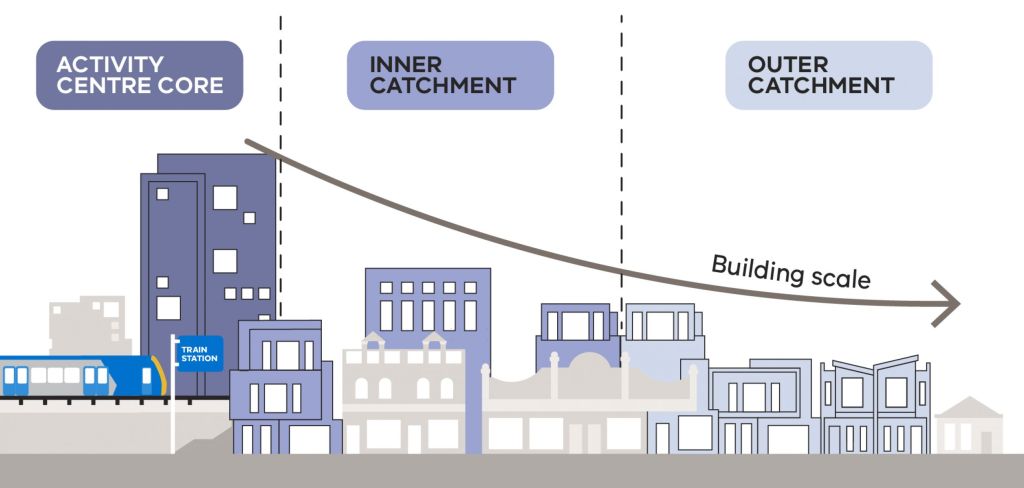
Brunswick and the inner north have been at the forefront of higher-density planning for the last 25 years. While increased density is very welcome in many parts of Brunswick, it has also led to many planning failures, and there is no excuse for these not to be addressed.
- More housing, sure – but not cheaper. Do people really think that apartments near Brighton station will magically become affordable? Land prices near transport factor in the amenity. Building costs in developed areas are higher. Developers want the best commercial returns for their location and property.
- Demand and supply are still mismatched. The density planning regime clusters certain limited kinds of housing, i.e. primarily 1 and 2 bedroom apartments with limited stock for 3+ bedrooms. It’s taken 20 years for shared amenities to be more of a sales feature in the inner north (rooftop gardens, bike racks), and these are also factored into prices.
- The planning battles seen locally have often resulted in far better planning outcomes than the “scorecard” or checklist style development. We’ve seen repeatedly basic planning errors, and show me a Traffic Study which isn’t a “you get what you paid for”
- Local amenities are assumed and will be supply-constrained. In the inner north, we still have a backlog of basic civic amenities rushing to catch up, especially parks, buses and other basic services under pressure from population growth. Drive down Nicholson Street, and you’ll see firsthand how transport planning can fail neighbourhoods.
- Massive inequities in planning remain. It’s easier to get a 100 unit through planning than it is to get a new shed approved. While developers can “pay off” their open space requirements, homeowners are tied up complying with minutiae.
- Builders going bust, issues with poor build quality, over-supply of over-priced empty storefronts, naivety of residents with no carparks, are all inevitable consequences of expanding the planning scheme so unilaterally and without back-up plans.
- There was nothing good about the old style of neighbourhood consultations. But there is no excuse for not providing excellent transparency over notices, plans, the permit timelines, and criteria for objecting – whether you live next door, or run a local business, or you’re a housing advocate, or the President of the Institute of Architects. Community consultation matters.
Merri-bek (when Moreland) had the biggest Planning department in the state. For “Better Decisions Made Faster” to be successful, then Merri-bek ratepayers should be in line for rate reductions when the number of Planning staff is reduced. In the short-term, the entire Planning apparatus of local government is going to be stretched to the limit trying to make sense of and catch up with the developer gold rush.


Leave a comment