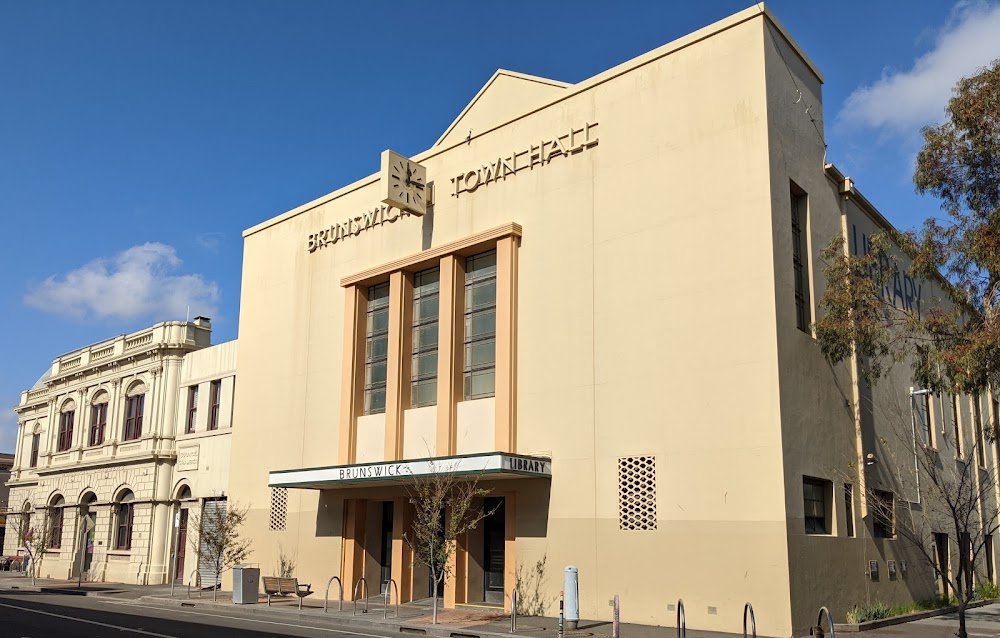
Reforming Victoria’s Public Library Funding Model
Over the past five decades, public libraries have undergone a profound transformation. No longer merely quiet, book-lined repositories of information, they have evolved into technology-enabled community hubs that provide digital access, lifelong learning, cultural engagement, social connection, and essential support services. Modern libraries function as critical civic infrastructure and serve as an important component of the social safety net, particularly for vulnerable and disadvantaged communities.
Despite this expanded role, Australia’s public library funding framework suffers from a fundamental structural flaw: unfunded state-to-local cost shifting combined with misaligned operational responsibilities.
State governments establish library strategies, determine statewide priorities, oversee digital platforms and standards, and maintain key cultural and archival assets. However, local councils remain responsible for owning and maintaining library buildings, funding infrastructure upgrades, and meeting the full cost of frontline staffing and service delivery. Over time, state financial contributions have not kept pace with rising service expectations, technological requirements, and operating costs. The result is a growing structural funding gap that is increasingly being borne by local ratepayers, creating significant pressure on municipal budgets and limiting service sustainability.
To address these challenges, two major reforms should be pursued, as proposed by the Municipal Association of Victoria (MAV).
1. Establish a Centralised Victorian Library Services Agency
Victoria should mandate the integration of back-office library functions into a single statewide agency. Administrative services, information technology, legal support, procurement, cataloguing, licensing, and book acquisition should be consolidated to eliminate duplication across multiple library services and councils.
A centralised model would generate substantial economies of scale, reduce administrative overheads, strengthen purchasing power, and improve consistency of service standards. Importantly, the financial savings achieved through consolidation should be reinvested directly into frontline service delivery, including expanded opening hours, improved digital services, enhanced collections, and greater support for regional and rural libraries.
2. Reform Funding Formulas to Support Geographic Equity
Library funding allocations should be redesigned to move beyond simple population-based formulas. The current approach disadvantages rural and regional communities, where smaller ratepayer bases must fund geographically dispersed services and facilities.
A regionalised geographic-access model should be adopted, recognising the higher costs of delivering equitable library services across large distances and lower-density populations. Every Victorian should have access to modern library services regardless of postcode. Funding arrangements must therefore account for geographic disadvantage and ensure regional councils are not forced to absorb unsustainable operating deficits simply to provide a basic level of service.
3. Preserve Local Identity Through Community-Driven Collections
While administrative functions should be centralised and funding should be regionally coordinated, library services must remain locally responsive. Efficiency reforms should not come at the expense of community identity, local history, or cultural relevance.
Regionalised service delivery must continue to empower libraries to develop collections, programs, and activities that reflect local communities. For example, libraries in Merri-bek should maintain strong local collections featuring publications such as The Brunswick Voice, works published by the Brunswick Historical Society, local history archives, and books by authors connected to the area or widely read within the community.
These collections might include works by Shaun Tan, Christos Tsiolkas, Alice Pung, Sally Rippin, and Andrew Weldon, alongside locally significant titles such as Grungewick and the Underbelly series. Libraries must remain places where communities see their own histories, stories, and identities reflected on the shelves.
Conclusion
Victoria’s public library system requires structural reform that aligns responsibility with funding, reduces unnecessary administrative duplication, and ensures fair access to services regardless of geography. A model that combines centralised administration, equitable regional funding, and locally responsive collections would deliver greater efficiency, stronger financial sustainability, and more relevant services for communities across the state. Public libraries are essential civic institutions, and their governance and funding arrangements should reflect the critical role they play in modern society.
Google backgrounder
The transformation of public libraries over the last 50 years marks a radical shift from silent, book-lined repositories of information into high-tech, dynamic civic squares that function as vital social safety nets.
As digital technology decentralized access to information, the physical and operational footprint of the library evolved to meet entirely new community demands, creating a stark contrast across decades: [1, 2, 3]
📊 The 50-Year Transformation Matrix
| Metric / Attribute [4, 5, 6] | 📚 The 1976 Public Library | 🌐 The 2026 Public Library |
|---|---|---|
| Primary Role | Custodian of physical books, print encyclopedias, and local physical archives. | Multi-purpose community living room, digital inclusion hub, and social safety net. |
| User Profile | Students doing research, researchers, and dedicated leisure readers. | Vulnerable citizens, remote workers, early learners, seniors, and neurodiverse groups. |
| Nature of Space | Highly siloed, quiet, rows of static bookshelves, and individual study desks. | Flexible, loud/collaborative zones, makerspaces, meeting rooms, and sensory spaces. |
| Location Strategy | Standalone civic brick buildings, often hidden within quiet municipal backstreets. | Co-located inside active retail hubs, regional GovHubs, and multi-service transit nodes. |
| Usage Dynamics | Transacted via physical book loans, card catalogs, and reference desk queries. | Driven by free Wi-Fi, digital licensing, co-working, 3D printing, and community programs. |
🏛️ 1. The Changing Profile and Nature of the Space
The physical environment of the library has changed to foster human connection rather than enforce solitary, silent study. [7, 8]
- From Silence to Collaboration: The architectural philosophy of the 1970s prioritized strict acoustic control, heavy timber furniture, and fixed rows of shelving to maximize print storage. Modern libraries utilize acoustic zoning—separating loud, collaborative gaming and makerspace areas from quiet study pods using glass and architectural acoustic panels. [9]
- The Creative Shift (Makerspaces): Libraries have transitioned from centers of passive consumption to spaces for active creation. Modern facilities feature “Makerspaces” equipped with 3D printers, laser cutters, virtual reality rigs, and fully equipped podcast and audio-recording studios accessible to the public for free. [10, 11, 12, 13, 14]
👥 2. The Changing Profile of the Library User
The demographics using libraries have expanded dramatically, transforming the facility into a primary frontline refuge for marginalized groups. [15]
- The “Third Place” for Remote Workers: The collapse of traditional office structures and the rise of hybrid/remote work have turned libraries into highly sought-after, free co-working spaces. Remote workers, freelance entrepreneurs, and university students occupy desks for hours, utilizing free high-speed commercial Wi-Fi. [16]
- The Frontline Vulnerability Net: As higher tiers of government closed physical service offices (e.g., Centrelink or banking branches), vulnerable populations shifted to libraries. Modern library staff assist elderly citizens navigating online Medicare accounts, help refugees lodge housing visas, and provide a temperature-controlled safe space for unhoused people during extreme weather events. [17, 18, 19]
📱 3. The Changing Nature of Usage and Collections
The transactional relationship between the citizen and the library card has shifted away from purely physical print logistics.
- The Digital Expansion: While physical book lending remains a core service, usage data from peak bodies like Public Libraries Victoria shows exponential growth in digital platforms. Libraries now purchase massive institutional licenses for e-books, e-audiobooks, streaming films (Kanopy), and online educational resources (LinkedIn Learning). [20, 21, 22, 23, 24]
- The “Library of Things”: Expanding beyond literature, modern libraries lend out physical utility items. Citizens can borrow energy-efficiency audit kits, musical instruments, robotic coding toys for children, seed packets for home gardening, and specialized tools. [25, 26, 27]
📍 4. The Changing Location and Geographic Strategy
Municipal planning has completely reconsidered where a public library belongs within the urban and regional landscape.
- Integrated Co-Location: Fifty years ago, libraries were built as standalone, monumental civic buildings. Today, councils explicitly co-locate libraries inside high-traffic retail centers, community health clinics, or swimming pools. This ensures a single trip allows a citizen to return a book, visit a doctor, and buy groceries. [28]
- The Mobile and Micro-Library: To service outer rural micro-towns with populations under 5,000, regional networks have evolved beyond the traditional bus-sized mobile library. Councils now deploy automated, 24/7 digital “micro-library lockers” at country train stations and general stores, allowing remote residents to click-and-collect books using a digital smartphone app. [29, 30]
[1] https://www.sciencedirect.com
[3] https://scholarworks.sjsu.edu
[4] https://ir.inflibnet.ac.in
[5] https://researchoutput.csu.edu.au
[6] https://www.clarknexsen.com
[7] https://www.tandfonline.com
[8] https://brandculture.com.au
[11] https://link.springer.com
[12] https://ijarst.in
[13] https://www.degruyterbrill.com
[14] https://liblime.com
[15] https://wagner.edu
[16] https://nyslibrary.libguides.com
[17] https://www.winterparklibrary.org
[18] https://www.theguardian.com
[19] https://bookriot.com
[21] https://nautil.us
[23] https://medium.com
[24] https://content.plconnect.slq.qld.gov.au
[25] https://www.foresightfordevelopment.org
[26] https://medium.com
[27] https://www.ijrls.in
[29] https://www.biblionix.com
[30] https://www.yprl.vic.gov.au
The fundamental flaw in Australia’s public library funding is a severe structural design failure known as unfunded state-to-local cost-shifting paired with mismatched operational boundaries.
While State Governments draft the overarching public library strategies, set digital standards, and manage central archival assets, Local Councils are legally and operationally forced to own the physical buildings, maintain the facilities, and pay 100% of the frontline staff wages [the 2026–27 State Budget’s reduction in road rehabilitation funds]. Over time, the state tier has steadily shrunk its financial contribution, leaving local property rates to absorb a multi-million-dollar operational deficit.
📉 1. The Death of the 50:50 Funding Split (The Cost-Shift)
When the modern public library network was established, state governments and local councils entered a historic partnership built on a 50:50 co-investment model. [1]
- The State Withdrawal: Over the past three decades, state contributions have failed to track inflation or population growth, steadily withering away. In Victoria, state operational funding has plummeted to cover less than 15% to 18% of a library’s real running costs. In New South Wales, the state funding collapse forces local councils to absorb an extra $181.8 million annual shortfall to keep doors open. [2]
- The Capped Squeeze: Because local councils operate under strict state-mandated property rate caps, they cannot easily raise extra independent revenue to plug this gap. To prevent vital community hubs from closing, councils are forced to divert capital away from basic infrastructure—like pothole patching and regional road repairs—straight into funding basic library staff wages.
🤹 2. The Multi-Purpose “Social Safety Net” Overload
Libraries are no longer just places to borrow physical books; they have evolved into the primary frontline service centers for the welfare, education, and digital needs of the community. [3, 4, 5, 6]
- The Unfunded Burden: As federal and state governments digitize their services (such as Centrelink, MyGov, Medicare, and VicRoads) and close physical regional offices, vulnerable citizens stream into local public libraries to access computers, free Wi-Fi, and printing. [7, 8, 9, 10]
- The Staff Distortion: Library technicians and librarians are forced to act as de facto social workers, digital literacy trainers, and tech-support staff for complex state and federal platforms. Councils must fund the extensive training and extra staffing hours required to manage this influx, representing an un-funded administrative download from higher tiers of government. [11]
🚜 3. The “Postcode Lottery” for Regional and Rural Shires
The funding formulas used by state governments to distribute supplementary library grants inherently disadvantage outer regional hubs and micro-towns with populations under 5,000.
- The Scale Deficit: Metropolitan councils enjoy dense populations spread over tiny geographical footprints. A single massive, state-of-the-art city library can efficiently service 100,000 concentrated ratepayers.
- The Regional Penalty: Rural shires manage multiple tiny, isolated branches spread over thousands of square kilometers to ensure equitable community access. Because they lack the economic scale of a city hub, their transport logistics, physical book rotation costs, and utilities are structurally higher. When state grant formulas distribute cash predominantly based on raw population counts, regional libraries face chronic operational deficits, leading to reduced opening hours and aging book stocks.
📋 4. Parallel Administrative Red Tape and Procurement Waste
Because individual councils maintain structural ownership of their library services, the sector suffers from widespread systemic fragmentation.
- The Duplication: Neighboring councils frequently run entirely separate administrative IT networks, separate payroll operations, and parallel book-procurement teams.
- The Capital Drain: Millions of taxpayer dollars are consumed by redundant back-of-house bureaucracies. Instead of utilizing a single, unified state-wide procurement engine to aggressively bulk-buy books, digital licenses, and streaming services (like Hoopla or Kanopy), individual library services negotiate separate, more expensive commercial contracts, chewing up vital operational funding before it ever reaches the community. [12, 13]
[3] https://theconversation.com
[4] https://www.dailydispatch.co.za
[5] https://www.tandfonline.com
[8] https://www.pewresearch.org
[9] https://www.healthservicesdaily.com.au
[10] https://citiespeoplelove.co
[11] https://www.theguardian.com
[12] https://www.instagram.com
Serious proposals to address the funding, structural duplication, and operational challenges of public libraries in Victoria focus on introducing state-wide single-card procurement, legislating digital service funding shares, embedding multi-agency co-location mandates, and transitioning to a modern, regionalized hub-and-spoke delivery model.
These structural blueprints, advanced by Public Libraries Victoria (PLV), the Municipal Association of Victoria (MAV), and infrastructure panels, aim to eliminate administrative waste and protect local councils from ongoing cost-shifting:
🌐 1. State-Wide Shared-Service & Unified Procurement Hubs
- The Proposal: Mandating the complete integration of back-of-house administrative, IT, legal, and book-procurement operations into a single, centralized Victorian agency.
- The Mechanism: Instead of individual municipal libraries separately negotiating commercial software licensing or book-buying contracts, a single state-wide entity bulk-buys all digital material (such as e-books, e-audiobooks, and streaming services). It utilizes a uniform, cross-border IT backbone that allows any Victorian library card to work instantly at any branch or 24/7 click-and-collect locker across the state.
- The Goal: To strip out millions of dollars in duplicated administrative overheads and pass those direct savings back to frontline regional library operating hours.
📱 2. The “Digital Inclusion” Cost-Share Framework
- The Proposal: Forcing federal and state agencies (such as Centrelink, MyGov, Medicare, and VicRoads) to financially compensate local government for using public libraries as their default physical storefronts.
- The Mechanism: A statutory funding formula would track the volume of public computer usage dedicated to higher-tier government services. The federal and state treasuries would be legally required to provide a rolling operational subsidy to councils to fund the extra library staff training, security, and digital infrastructure required to manage these complex public platforms.
- The Goal: To end the invisible, un-funded administrative download onto local property rates and ensure higher tiers of government pay for their own service delivery channels.
🏛️ 3. Mandatory Multi-Service Co-Location Planning Laws
- The Proposal: Overhauling state planning regulations to legally ban the construction of standalone civic libraries, mandating integrated community hubs instead.
- The Mechanism: Future capital works must combine libraries directly inside active commercial shopping strips, train stations, regional GovHubs, or early childhood and health clinics. Capital infrastructure grant pools (like the Growing Suburbs Fund) would be unlocked exclusively for multi-purpose facilities.
- The Goal: To achieve intense economies of scale, slashing localized utility bills, facility management overheads, and security costs by sharing a single physical footprint across multiple public sectors.
🚜 4. Transitioning to Regional Hub-and-Spoke Networks
- The Proposal: Restructuring library funding formulas away from raw municipal population counts, shifting instead to a regionalized geographic-access baseline model.
- The Mechanism: Large regional cities act as “hubs”—carrying the heavy administrative, IT, and specialized recording studio assets. Smaller outer rural micro-towns (populations < 5,000) operate as highly flexible, automated “spokes.” These micro-branches utilize unstaffed, card-activated access hours, smart lockers, and mobile pop-up community spaces rather than carrying full-scale brick-and-mortar operating costs.
- The Goal: To fix the regional postcode lottery, ensuring rural shires can deliver equitable modern library services without incurring unsustainable municipal deficits.


Leave a Reply