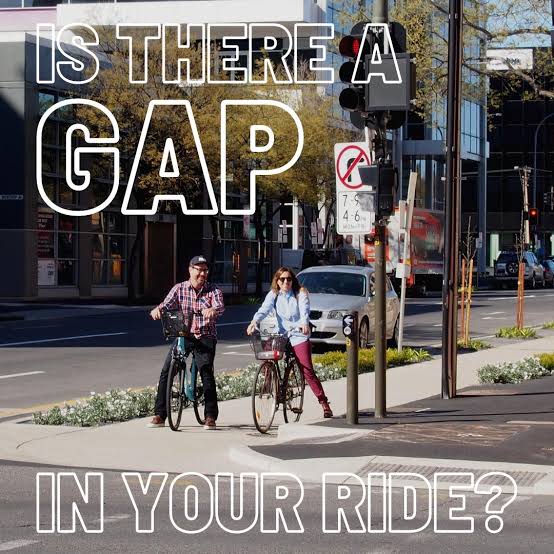
I support more effective investment in safe cycling infrastructure. Cycling should not be viewed solely as a transport initiative. Every dollar invested in cycling can also contribute to road safety, public health, active recreation, tourism, environmental outcomes and regional development.
Funding for cycling infrastructure should be considered across a range of government programs, including:
- Transport and road safety, including TAC-funded safety initiatives that reduce crashes and injuries for all road users.
- Environment, parks and Crown land, through the development of shared trails and improved access to natural areas.
- Regional development and tourism, by supporting rail trails, cycling events and visitor infrastructure that bring economic activity to regional communities.
- Growth area planning and developer contributions, ensuring new suburbs are designed with connected cycling networks from the beginning, rather than retrofitted later at greater cost.
- Sport and recreation, by encouraging active lifestyles and expanding access to recreational cycling opportunities.
- Health and education, through programs that improve physical activity, reduce chronic disease, and help children travel safely to school.
Cycling delivers multiple public benefits from a single investment. Government funding should recognise these broader outcomes and draw on the full range of relevant funding streams, not just transport budgets.
Victoria already has a Strategic Cycling Corridor network planned. The problem is delivery. I support dedicating up to 2% of transport infrastructure funding to completing missing links, with priority for outer suburban and regional communities that currently lack safe transport alternatives. By integrating cycling infrastructure into existing road and rail projects, we can expand transport choice, improve safety and reduce congestion without major new spending or increasing taxes. This is a practical, cost-effective investment that helps working families and regional Victorians, not just inner-city cyclists.
A fiscally credible cycling policy in Victoria’s current budget environment should avoid promising large new spending programs. Instead, it should focus on getting better value from transport dollars already being spent, especially where cycling infrastructure can be delivered alongside existing road, rail and urban renewal projects.
Strategic Cycling Corridors Delivery Fund
Policy
I support up to 2% of Victoria’s annual transport infrastructure capital budget to completing Strategic Cycling Corridors, prioritising projects that connect outer suburban, growth-area and regional communities to schools, jobs, public transport and local services.
Rather than creating a stand-alone bureaucracy, funding will be integrated into existing transport projects wherever possible, ensuring cycling infrastructure is delivered at the same time as road upgrades, rail projects and major redevelopment works.
Priority will be given to areas currently underserved by safe cycling infrastructure, particularly Melbourne’s outer suburbs and regional cities.
Why This Is Affordable
Victoria faces significant budget pressures and growing debt. In this environment, government must focus on investments that deliver multiple benefits from a single dollar spent.
Strategic Cycling Corridors are among the lowest-cost transport infrastructure projects available. A kilometre of protected cycling infrastructure typically costs only a fraction of the cost of widening roads, building freeway interchanges or constructing new rail infrastructure.
By prioritising cycling infrastructure within existing transport projects, Victoria can improve transport capacity without committing to major new borrowing.
Why This Is Fairer
Historically, the best cycling infrastructure has been concentrated in wealthier inner-city areas.
My approach will reverse that bias by prioritising:
- Growth corridors such as Melton, Wyndham, Hume, Casey and Cardinia.
- Regional centres including Geelong, Ballarat, Bendigo, Shepparton and Latrobe Valley.
- School connections and routes to TAFE campuses.
- Safe access to railway stations, bus interchanges and activity centres.
- Missing links that prevent complete journeys.
The goal is not to subsidise recreational cycling for affluent professionals. The goal is to provide affordable transport options for working families, students, apprentices, pensioners and people who cannot afford the rising cost of car ownership.
Practical Outcomes
This policy would help:
- A teenager ride safely to school.
- An apprentice reach a train station without requiring a second family car.
- A pensioner access local shops independently.
- A worker save thousands of dollars a year on transport costs.
- Motorists benefit from reduced congestion on short local trips.
Accountability
All projects funded through the program must demonstrate one or more of the following:
- Improved access to education.
- Improved access to employment.
- Improved access to public transport.
- Demonstrable road safety improvements.
- Connectivity between existing fragmented routes.
An annual report will publish:
- Projects completed.
- Kilometres delivered.
- Estimated users served.
- Distribution of funding between inner, middle, outer suburban and regional Victoria.
Google backgrounder
How the parties compare
| Party | General approach to cycling | Typical focus | Likely attitude to SCCs |
|---|---|---|---|
| Greens | Strongly pro-cycling as a major transport mode | Protected bike lanes, mode shift from cars, active transport funding | Strong support, including dedicated SCC funding [cdn.greens.org.au], [greens.org.au] |
| Labor (Victoria) | Supports cycling as part of broader transport planning | Active transport integration, rail projects, safety improvements | Supportive but generally integrated into wider transport programs rather than a fixed budget share [transport.vic.gov.au], [vic.gov.au], [vic.gov.au] |
| Liberal Party | Generally prioritises roads and vehicle movement; support varies by candidate and location | Road investment, congestion reduction, selected cycling projects | Mixed. Supports some cycling infrastructure but tends to resist reallocating road space from cars [bicyclenet…ork.com.au], [theage.com.au] |
| Nationals | Focus on regional roads and freight networks | Roads, bridges, regional connectivity | May support rail trails and regional paths but cycling is not usually a transport priority [auspolliewatch.com] |
| One Nation | Strong emphasis on roads, regional services and cost-of-living concerns | Roads and infrastructure spending | Generally low priority for cycling infrastructure compared with roads and freight investment [auspolliewatch.com] |
Greens
The Greens are the most explicitly pro-cycling party. Their transport policy calls for greater investment in walking and cycling, dedicated cycling infrastructure and reducing dependence on private vehicles. [greens.org.au]
Recently they formally endorsed Bicycle Network’s “Gimme 5” proposal, supporting allocation of 5% of the transport budget to Strategic Cycling Corridors. [cdn.greens.org.au]
Political strength: ambition, climate benefits, mode shift.
Political weakness: often perceived as inner-city focused and less attentive to outer-suburban travel realities.
Labor
Victorian Labor has progressively expanded active transport planning through Strategic Cycling Corridors, the Active Transport Plan, permanent bike lane projects and cycling infrastructure attached to major rail and road works. [vic.gov.au], [transport.vic.gov.au], [transport.vic.gov.au]
Labor’s approach is generally:
- cycling as one transport mode among many;
- integration with public transport;
- cycling infrastructure delivered alongside major projects;
- less enthusiasm for large dedicated cycling funding pools. [vic.gov.au], [bicyclenet…ork.com.au]
Political strength: pragmatic and deliverable.
Political weakness: delivery of SCCs has often been slower than advocacy groups would like.
Liberals
The Liberals usually frame transport around congestion relief, road capacity and economic productivity.
Historically they have supported selected cycling projects and safety measures, but have not prioritised cycling as a core transport strategy. [bicyclenet…ork.com.au]
Sections of the Liberal movement have actively opposed removing road space or parking for bike lanes. [theage.com.au]
Political strength: appeals to motorists and outer-suburban commuters.
Political weakness: less likely to invest heavily in cycling networks as a transport solution.
Nationals
The Nationals are primarily focused on:
- regional roads;
- freight routes;
- agricultural transport;
- regional infrastructure. [auspolliewatch.com]
They may support rail trails or cycling tourism projects where there is a clear regional economic benefit, but commuter cycling is not a major policy focus.
Political strength: regional economic focus.
Political weakness: limited emphasis on active transport as everyday mobility.
One Nation
One Nation generally prioritises:
- road investment;
- cost-of-living concerns;
- regional infrastructure;
- scepticism towards policies seen as disadvantaging motorists. [auspolliewatch.com]
Cycling infrastructure is usually not a major policy priority unless framed around recreation, tourism or practical local transport benefits.
Political strength: resonates with voters who feel transport policy has become too focused on inner-city priorities.
Political weakness: offers little comprehensive vision for active transport.


Leave a Reply