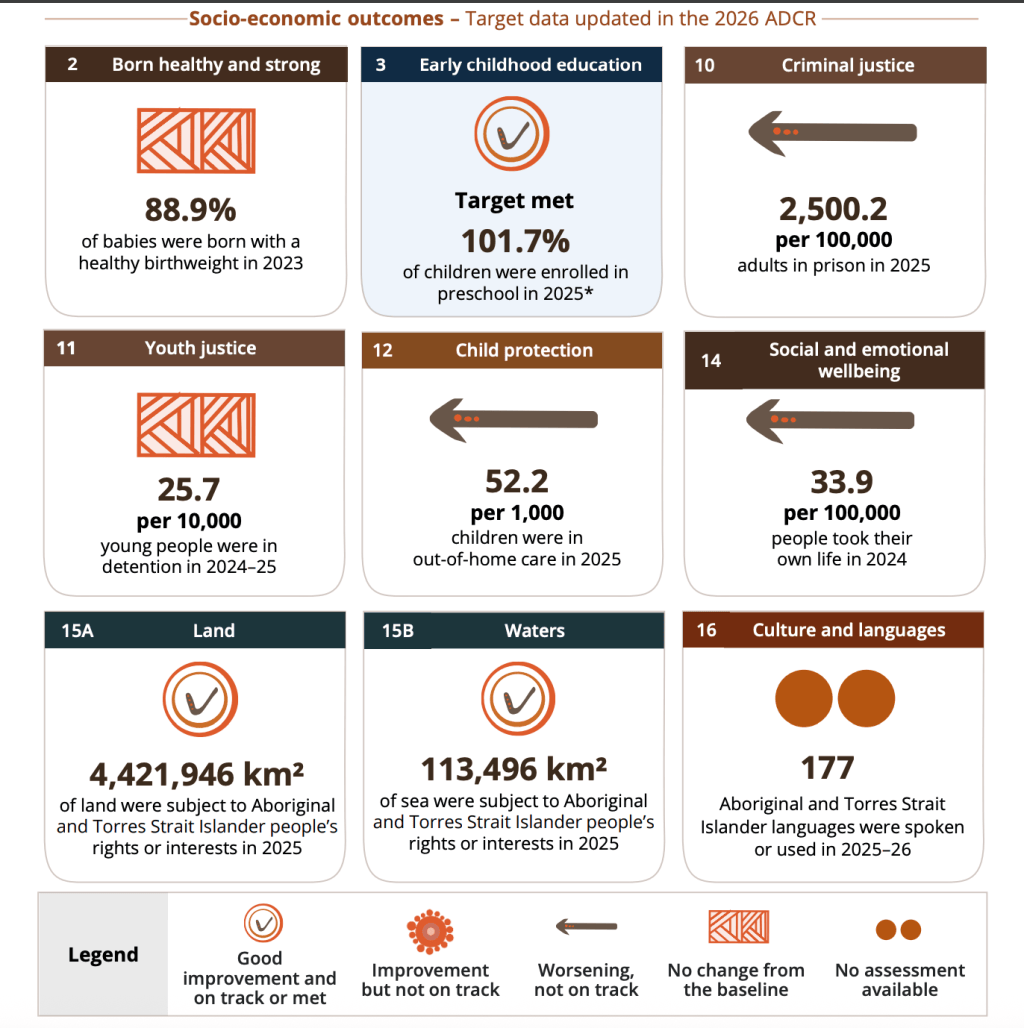
The best you can say about the outcomes in “Closing the Gap” is that they are mixed. Agreements are expenditure must be measured against actual results for people. We need to do more to understand what is, and isn’t working, and resist “one size fits all” approaches.
I support practical reconciliation: respect for Indigenous culture, equal opportunity for Indigenous Victorians, and a relentless focus on improving real-world outcomes. I believe the priority should be closing gaps in health, education, housing, safety and economic participation. Cultural recognition is important and enriches our shared understanding of Australia, but it should sit alongside a strong commitment to delivering tangible improvements in people’s lives.
I will seek stronger public accountability from all service-delivery departments for measurable improvements in Closing the Gap outcomes, with a greater focus on health, education, housing, safety and economic participation than on bureaucratic processes and symbolic measures.
I support reconciliation that combines respect for Indigenous culture with a clear focus on improving the everyday lives of Indigenous Victorians.
Government should be judged on whether it helps people live healthier, safer and more prosperous lives. Cultural recognition matters, but it must be accompanied by practical results in health, education, housing, employment and community wellbeing.
1. Focus on Outcomes That Matter
I will support Indigenous affairs policies that are guided by measurable improvements in quality of life.
- Prioritise improvements in health, educational attainment, employment, housing stability and community safety.
- Increase transparency about progress and areas where results are not being achieved.
- Assess government performance according to outcomes delivered, not simply spending levels or administrative activity.
- Direct public resources towards initiatives that demonstrate real and measurable benefits.
2. Local Solutions and Community Input
Communities should have a meaningful voice in decisions that affect them.
- Support greater involvement of local Indigenous communities in policy development and service design.
- Encourage flexible approaches that reflect the needs of different communities rather than imposing uniform solutions.
- Reduce unnecessary bureaucracy that prevents frontline services from responding to local circumstances.
- Support culturally responsive approaches where they achieve better outcomes.
3. Fair Access to Economic Opportunity
Economic participation is essential to individual independence, family wellbeing and community prosperity.
- Ensure Indigenous Victorians have equal access to funding, education pathways, training opportunities, apprenticeships, employment programs, business assistance and government services.
- Identify and remove direct and indirect barriers that limit participation and opportunity.
- Ensure public programs are culturally sensitive, accessible and free from discrimination.
- Promote equal treatment under government policies while recognising and addressing practical barriers to participation.
- Support pathways into employment, business ownership and economic independence.
4. Strong Families and Better Life Outcomes
Strong families and thriving communities are the foundation of long-term wellbeing.
- Emphasise early intervention and prevention where evidence shows they improve outcomes.
- Ensure government services work together more effectively to address complex challenges.
- Focus on reducing disadvantage and expanding opportunities across all stages of life.
- Prioritise practical support that strengthens family and community wellbeing.
5. Health, Housing and Community Wellbeing
Every Victorian deserves access to the essentials of a good life.
- Improve access to quality healthcare and mental health services.
- Work to reduce housing insecurity and overcrowding.
- Ensure regional and remote communities are not overlooked in service delivery.
- Focus on practical measures that improve wellbeing and community resilience.
6. Safe and Resilient Communities
Safe communities are essential for opportunity and prosperity.
- Support evidence-based approaches to reducing crime and victimisation.
- Focus on prevention, rehabilitation and addressing the drivers of disadvantage.
- Encourage locally informed approaches to community safety.
- Ensure public services respond effectively to community concerns.
7. Respect for Culture and Shared Heritage
Indigenous culture is part of Victoria’s shared story.
- Support the continued use of Acknowledgement of Country at civic and public events.
- Support the broader use of Indigenous place names alongside established names where supported by local communities.
- Promote understanding of Indigenous history, culture and heritage.
- Encourage the preservation and sharing of Indigenous languages, traditions and knowledge.
- Ensure cultural recognition complements, rather than replaces, action on practical outcomes.
Google backgrounder
In Victoria, First Peoples affairs are shaped by structural state-led reforms alongside severe systemic inequities. As the state navigates the 2026 election cycle, the key issues focus on the preservation of the Treaty framework, justice and bail reforms, economic redress, and combating rising systemic racism. [1, 2, 3, 4, 5]
1. The Treaty Process and Political Friction
Victoria has historically led the nation in progressing towards a Treaty, but the framework faces an increasingly polarised political landscape. [1, 2]
- Treaty Negotiations: Work continues to implement the Statewide Treaty Act 2025 and manage the independent Treaty Authority, which acts as the “independent umpire” for upcoming agreements. [1, 2]
- Political Polarization: The future of the framework is a central debate. The Liberal and National parties have proposed the abolition of the Treaty process, clashing directly with the Labor government’s commitments and the advocacy of the First Peoples’ Assembly of Victoria. [1, 2]
- Self-Determination: Transferring formal decision-making power, authority, and resource control from government departments to Traditional Owner Groups remains the primary self-determination objective. [1, 2]
2. Truth-Telling, Redress, and Galang Wa
Addressing historical and contemporary injustices continues through formal accountability and truth-telling structures. [1, 2]
- Yoorrook Justice Commission Findings: Ongoing inquiries from the Yoorrook Justice Commission emphasize an unbroken line between historical colonial atrocities and modern disadvantage. Yoorrook insists that any Treaty must include comprehensive, multidimensional redress (restitution and compensation). [1, 2]
- Galang Wa Representation: The establishment of Galang Wa, a permanent, elected Aboriginal representative body, provides a direct accountability mechanism to hold the Victorian Government to its promises. [1]
3. Justice System and Bail Laws
The extreme overrepresentation of Koori people—particularly youth and women—in the justice and correctional systems remains critical. [1, 2]
- Youth Justice & Out-of-Home Care: First Peoples children face deep systemic inequities, making up approximately 40% of those in out-of-home care and remaining severely overrepresented in juvenile detention.
- Bail Act Application: Navigating Section 3A of the Bail Act 1977 requires courts to explicitly weigh an accused person’s Aboriginal cultural identity to mitigate systemic mass incarceration.
- Koori Courts: Expanding and supporting specialized Koori Court locations remains vital for incorporating Elders and community knowledge into Magistrates’ and Children’s court sentencing processes. [1, 2]
4. Systemic Racism and Workplace Safety
Recent data shows a sharp and dangerous escalation in discrimination across public and professional spaces. [1, 2]
- Rising Intolerance: Reports show that discrimination against First Peoples in Victoria rose to 54%. This spike has been severely exacerbated by the fallout of the failed national Voice Referendum and a rise in far-right extremist rhetoric.
- Workplace Misconduct: A 2026 parliamentary inquiry revealed that nearly 60% of First Nations people face racism at work, with only 40% viewing their workplaces as culturally safe due to a severe lack of protected reporting options.
- Educational Exclusion: Unconscious bias and overt racism within the Victorian schooling system continue to drive disproportionate suspension and exclusion rates among Aboriginal students. [1, 2, 3]
5. Economic Disparity and Closing the Gap
Despite the growth of independent Aboriginal businesses, structural barriers continue to limit true wealth creation. [1]
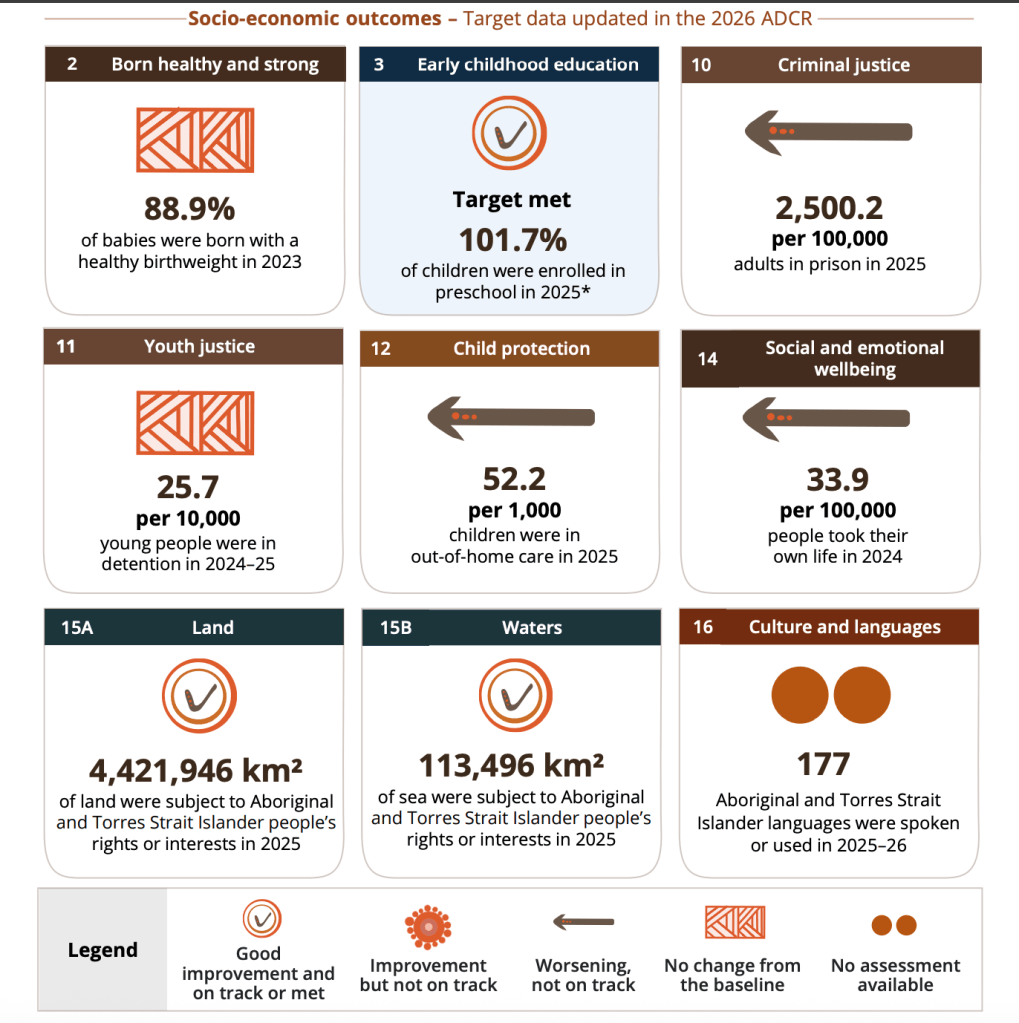
- Closing the Gap Deficits: Data from the Victorian Government Aboriginal Affairs Report notes that only a small fraction of National Agreement targets are currently on track, with critical metrics in health, housing, and systemic safety actively worsening.
- Capital Exclusion: Advocates are pushing for self-determined economic frameworks. This includes establishing dedicated capital funds to help Traditional Owners enter commercial property, housing development, and capital investment markets to counteract generations of wage and land theft. [1, 2, 3]
The historical and contemporary friction between the British-derived Westminster system of governance and First Nations Traditional Owner groups centers on a fundamental philosophical and legal clash: the assertion of absolute parliamentary sovereignty versus unceded Indigenous sovereignty and self-determination.
In Victoria—the state navigating Australia’s most advanced sub-national Treaty process—this structural clash manifests across several key flashpoints:
1. Parliamentary Sovereignty vs. Unceded Sovereignty
The core structural tension in a Westminster democracy is the principle that Parliament holds absolute legislative authority and cannot bind its successors.
- The Legislative Clash: When the Victorian Government enacted the landmark Statewide Treaty Act 2025, it carefully preserved Westminster structures by integrating consultation mechanisms (such as the independent Gellung Warl representative body) rather than altering the state’s constitution. [1, 2]
- The Electoral Vulnerability: Because a Westminster parliament can amend or repeal previous laws with a simple majority, First Nations agreements lack permanent structural protection. This is highly visible as the Coalition opposition vows to abolish Gellung Warl and scrap the Treaty framework if elected, replacing the independent body with a standard state government department overseen by a Minister. Traditional Owners argue this reduces self-determination back to failed bureaucratic advisory models. [1]
2. Treaty Frameworks and Institutional Vetoes
The Westminster model relies heavily on centralized executive government power, which often conflicts with the decentralized, localized authority of Traditional Owner groups.
- The “One Voice” Requirement: Under the rules managed by the independent Treaty Authority, the Westminster state requires a single, unified group to negotiate a local Treaty for a specific geographic area. However, Traditional Owner boundaries and cultural authority are complex and fluid. Forcing diverse clans—such as the Wurundjeri Woi-wurrung or Dja Dja Wurrung—into rigid, state-defined legal corporations can spark inter-group friction and delay negotiations. [1, 2]
- Control of Land and Resources: Traditional Owner groups seek true “nation-to-nation” treaties that return management of land, water, and cultural heritage to local custodians. The Westminster executive, conversely, faces intense pressure from commercial property developers and industries to maintain centralized control over public lands and zoning laws. [1, 2, 3, 4]
3. Truth-Telling Disparity and Executive Inaction
The independent Yoorrook Justice Commission—granted the full investigative powers of a Royal Commission—formally concluded that Victoria’s history involved colonial genocide, massacres, and ongoing systemic exclusion. However, translating these findings into structural legal changes highlights a deep divide: [1, 2]
- Recommendation Rejections: While the Westminster executive welcomed the truth-telling public record, the Allan Government has faced severe backlash from groups like the Victorian Aboriginal Legal Service for rejecting or stalling critical Yoorrook recommendations. The state government refused to cede legislative control on core Westminster functions, such as fully reforming bail laws or raising the minimum age of criminal responsibility.
- The Bureaucratic Wall: Traditional Owners argue that while the head of state can offer formal apologies, the deeply entrenched Westminster public service continues to guard its decision-making power, blocking the genuine transfer of resources and authority to Aboriginal Community Controlled Organisations (ACCOs). [1, 2, 3, 4, 5, 6]
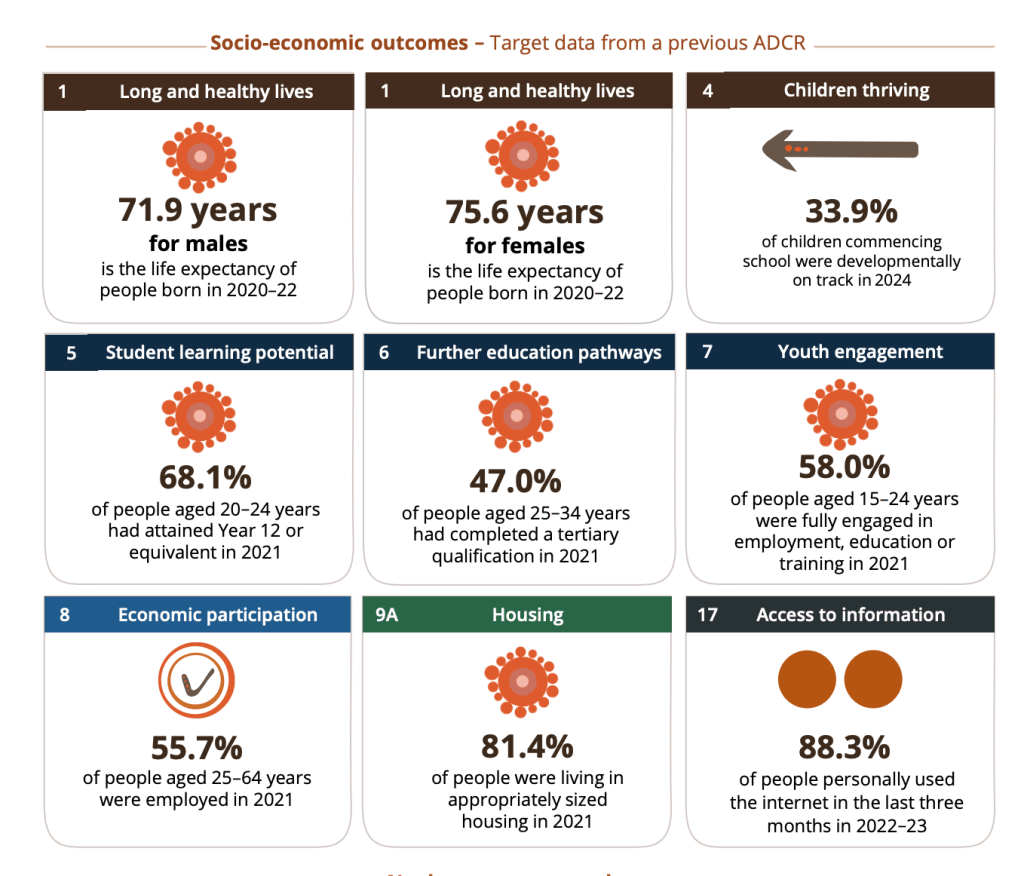
https://www.pc.gov.au/closing-the-gap-data/annual-data-report/2026


Leave a Reply