The introduction of broad-based Land Taxes is the “GST of our time” and as such, is deeply unpopular. However, if we are serious about making housing more affordable for young people, then we must directly address distortions in the housing market. Housing affordability for those on lower incomes continues to increase.
Think tanks (not me) have modelled this change so that land tax becomes a broad‑based, recurring annual tax applied to all properties, not just investment properties, calculated on unimproved land value.
Victoria’s introduction of Land Taxes was at least in part to penalise holiday house and investment property owners, to offset tax breaks elsewhere. What we have is an increasingly confusing and expensive-to-administer tax scheme. Unfortunately, the Land Tax drives housing investment away from Victoria into other states, while penalising local owners whose capital is not as portable (such as holiday house owners).
✔ Annual
✔ Charged to all property owners
✔ Based on unimproved land value
✔ At a low rate (~0.5% recommended)
✔ Calculated by:
Annual Land Tax = Land Value × 0.5% (approx.)
References:
- https://www.realestate.com.au/news/stamp-duty-vs-land-tax-victoria-swap-could-save-up-front-but-cost-long-term/
- https://www.vu.edu.au/about-vu/news-events/news/replacing-stamp-duty-with-a-land-tax-could-save-home-buyers-big-money-heres-how
- https://grattan.edu.au/news/victoria-shows-how-to-abolish-stamp-duty/
- https://www.propertiesandpathways.com.au/commercial-property-investment/land-tax-vs-stamp-duty
- https://www.housingdata.gov.au/
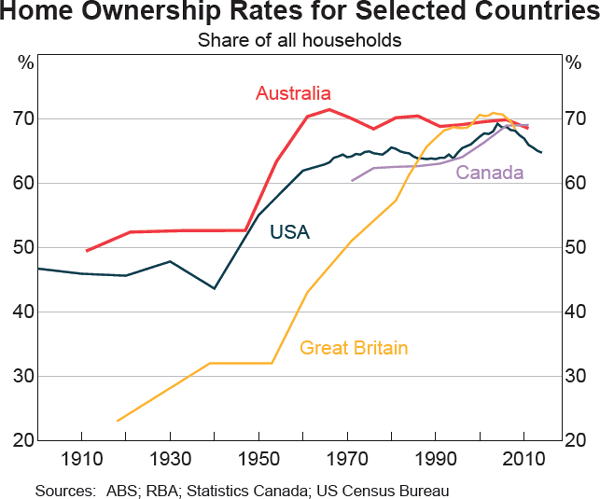
Industrialisation and post-WWII economic growth drove middle-class prosperity, wage equality, and home ownership.
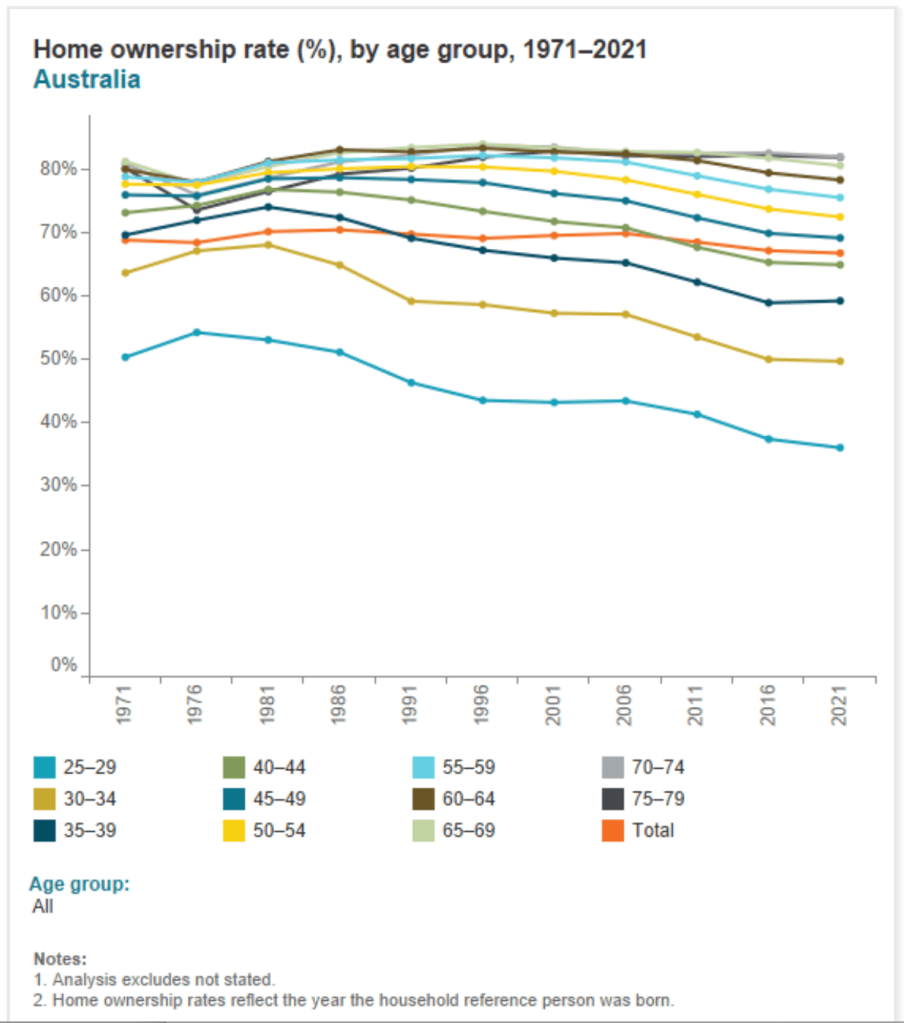
Home ownership has been declining steadily alongside rising education levels for young people but also rising income inequality.
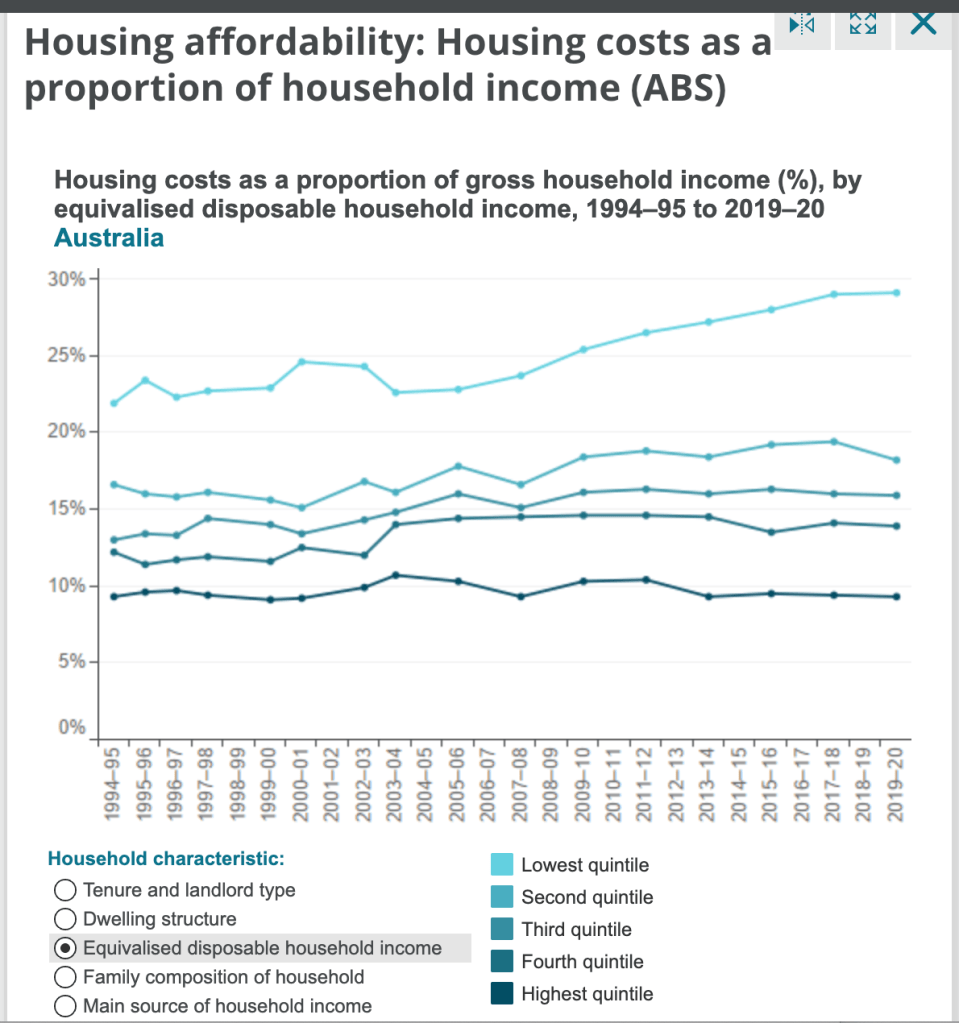
Housing affordability is fine for some on high incomes but terrible for many on low incomes, and getting worse.
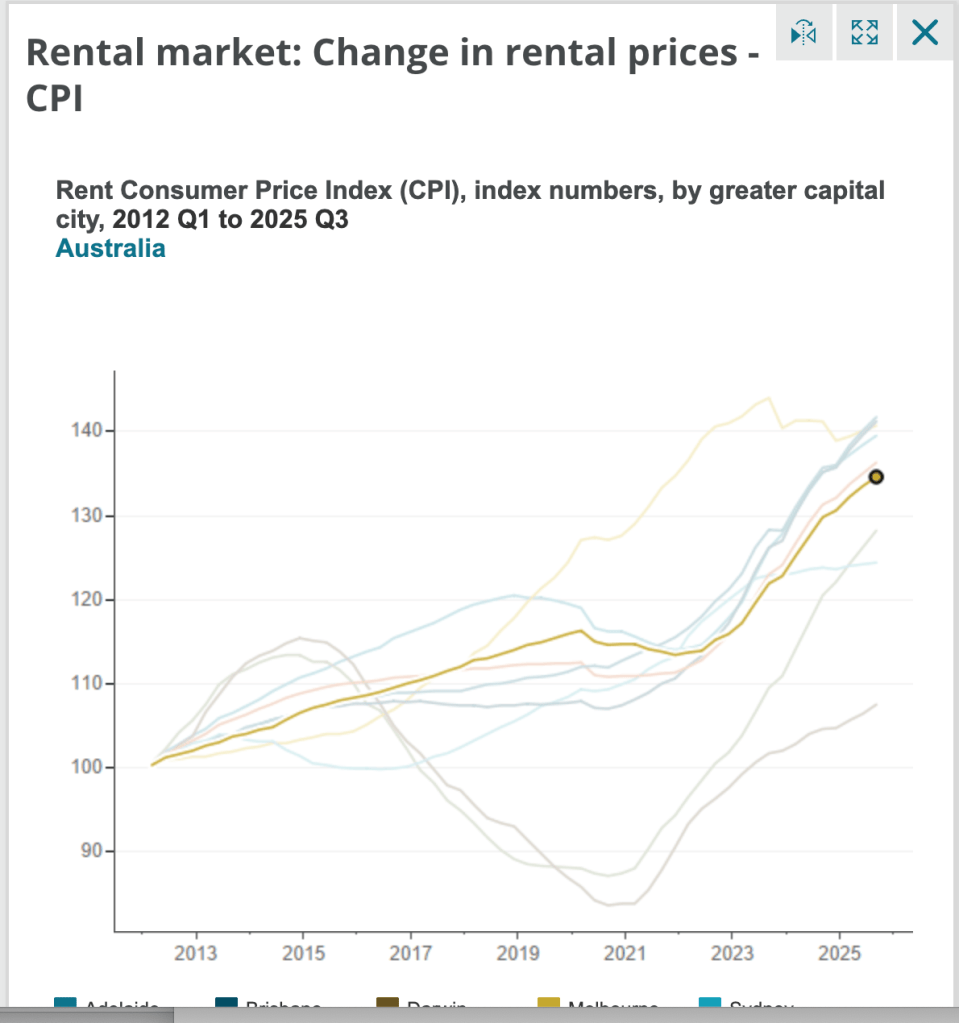
Rents are increasing at a faster rate.


Leave a Reply