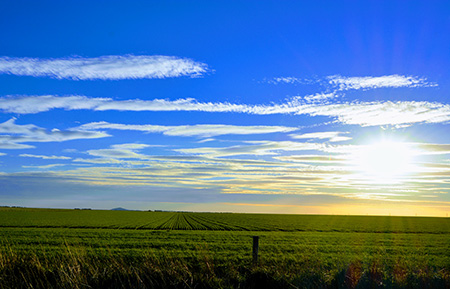
Victoria is the second largest agricultural producer (behind NSW) and has the largest agricultural workforce. Agriculture contributes 2% of Gross State Product. 60% of Australia’s milk comes from Victoria, and 73% of dairy exports. Victoria is Australia’s leading food and fibre exporter, accounting for 27% of the national total. Victoria contributes 45% of national horticultural exports and 46% of national animal fibre exports.
The sector (along with food and fibre processing) supports about 150,700 jobs. The majority of agricultural employment (over 85%) is located in regional Victoria.
At 0.5%, Victoria has the smallest agricultural budget relative to its total expenditure.
The agricultural sector is facing some of the most significant challenges of any industry. The state government should not turn its back on regional communities grappling with some of today’s biggest issues:
- Low-carbon energy transition towards solar and wind, placing critical infrastructure in the regions
- The impact of climate change exacerbates fire, flood and other extreme weather risks
- The impact of climate change on crop selection, crop success, and the impact of feral plants and animals
- Supporting biodiversity in both agricultural and regional town contexts
- Victoria’s people-intensive primary production relies on skilled and available staff in the regions
- Global political instability impacts access to worldwide export markets and the strategic importance of food security
- Water allocation conflicts between the needs of agriculture, people and the environment
As the Farrer byelection tells us, regional Australia is at the forefront of several policy conundrums. Managing low-carbon energy transition versus absorbing the impact of rising energy costs. Ensuring the availability of skilled staff versus absorbing the impact of a more diverse population. Reeling from the direct impacts of climate change, but competing with the environment for water.
The complex division of responsibilities and programs between two key state departments and local government creates challenges and conflicts for people in the regions.
- Department of Energy, Environment and Climate Action (Agriculture Victoria)
- Department of Jobs, Skills, Industry and Regions
The agricultural sector needs support more than ever in these times of massive change.
Victoria is the second-largest agricultural producer in Australia by value, behind New South Wales, but it has the largest agricultural workforce in the country. [1, 2]
📈 State Comparison: Production Value
As of the most recent reporting periods (2024–2026), the gross value of agricultural production (GVAP) rankings typically place Victoria just behind NSW due to the latter’s massive broadacre crop and livestock scale. [3]
| State [1, 4] | GVAP (Estimated 2024-25) | % of National GVAP | Key Dominance |
|---|---|---|---|
| New South Wales | ~$21.5 billion | ~25-27% | Broadacre crops, Beef cattle |
| Victoria | $20.2 billion | ~23-24% | Dairy (62%), Sheep meat (44%), Horticulture (30%) |
| Queensland | ~$16-18 billion | ~18-20% | Beef cattle, Sugarcane, Fruit |
Workforce and Intensity
While NSW and QLD have larger landmasses, Victoria is more production-intensive, achieving higher value per hectare and employing more people. [2]
- Largest Workforce: Victoria has the largest agriculture workforce in Australia (approx. 26.3% share), followed by NSW at 25.6%.
- Export Leader: Victoria is Australia’s largest exporter of dairy (77%) and horticulture (50%).
- Efficiency: Victoria produces roughly one-quarter of Australia’s total agricultural value on only 3% of its landmass. [5, 6]
🐄 Sector Specifics (Rankings)
- Dairy: Victoria is the undisputed leader, producing over 60% of Australia’s milk.
- Beef: Queensland leads significantly (approx. 10.8M head), followed by NSW (4.4M) and Victoria (2.2M).
- Sheep & Wool: Victoria and NSW are the primary rivals, with Victoria leading in sheep meat and NSW traditionally leading in wool volume.
- Horticulture: Victoria and Queensland are the top two states; Victoria leads in temperate fruits (pears, stone fruit) and nuts, while QLD leads in tropical fruits (avocados, bananas). [2, 6, 7, 8, 9]
📊 Recent Growth: Victoria’s sector grew by approximately 1.1% in GSP contribution in late 2025, slightly outpacing NSW’s 0.9% growth, according to the ABS State Accounts. [10]
[1] https://agriculture.vic.gov.au
[2] https://agriculture.vic.gov.au
[3] https://agriculture.vic.gov.au
[5] https://agriculture.vic.gov.au
[6] https://agriculture.vic.gov.au
[8] https://agriculture.vic.gov.au
[10] https://theconversation.com
State agricultural support in Australia is primarily focused on risk management, climate resilience, and innovation rather than direct subsidies. While all three states collaborate with the Federal Future Drought Fund, their delivery mechanisms differ. [1]
🏛️ State Agricultural Support Comparison (2025–2026)
| Feature [2, 3] | Victoria (VIC) | New South Wales (NSW) | Queensland (QLD) |
|---|---|---|---|
| Key Agency | Agriculture Victoria | Local Land Services (LLS) | Department of Agriculture and Fisheries (DAF) |
| Financial Authority | Rural Finance | Rural Assistance Authority (RAA) | QRIDA |
| Drought Strategy | Resilience Focus: Subsidised training and business planning. | Transport & Infrastructure: Subsidies for fodder/water and loans. | Productivity-Led: Large grants for permanent infrastructure. |
| Climate Support | High investment in Net Zero and energy transitions. | Focus on Natural Capital and biodiversity offsets. | Focus on Reef Protection and sustainable grazing. |
🏗️ Core Program Highlights
Victoria: Innovation & Emissions Focus
Victoria’s support is heavily weighted toward modernisation and carbon reduction.
- Agriculture Sector Pledge: Provides grants for farmers to adopt methane-reducing technologies and solar infrastructure.
- Farm Business Resilience: Offers subsidised learning in strategic management and decision-making.
- On-Farm IoT Grants: Victoria has historically led in funding for digital technology (e.g., soil sensors, automated irrigation) to boost productivity. [4]
New South Wales: Regional Infrastructure
NSW often provides more direct support for logistics and disaster recovery.
Queensland: Resilience & Reef Health
Queensland’s programs are distinct for their massive infrastructure grants and environmental compliance support.
📈 Summary of Financial Support Types
- Concessional Loans: Available in all states via the Regional Investment Corporation (RIC) for drought, business improvement, and succession planning.
- Farm Management Deposits (FMD): A federal tax-effective tool used across all states to “bank” pre-tax income in good years for use in bad years.
- Household Allowance: The Farm Household Allowance is a federal payment available to families in all states experiencing financial hardship. [6, 7]
Key Difference:Queensland currently offers the highest direct-grant amounts for infrastructure ($50k), while Victoria provides the most comprehensive support for energy and emissions transitions.
[1] https://www.agriculture.gov.au
[2] https://www.infrastructure.gov.au
[4] https://www.agriculture.gov.au
[5] https://www.infrastructure.gov.au
[6] https://www.agriculture.gov.au
[7] https://rdacentralwest.org.au
The restructure of the Department of Energy, Environment and Climate Action (DEECA) involves significant budget reductions and staff cuts that have raised concerns across the Victorian agricultural sector. [1, 2, 3, 4]
📉 Key Budget & Job Cuts (2025–2026) [5]
As of late 2025 and moving into 2026, the Victorian Government has implemented a series of “cost-cutting” measures targeting DEECA and its sub-agency, Agriculture Victoria. [6, 7]
- Funding Drop: The Agriculture Victoria budget for 2025–26 is $537.2 million, a decrease from $614.8 million in the previous financial year—a cut of roughly $77.6 million.
- Job Losses: Approximately 350 public sector jobs are being cut across DEECA.
- 45 to 55 roles specifically in agriculture and food.
- Over 130 roles in the environment unit.
- 200+ roles in land policy and statewide biodiversity teams, impacting regional service delivery.
- Regional Development: A $52 million cut from the regional development budget has been reported, affecting programs that support rural investment and workforce retention. [1, 2, 3, 8, 9]
⚠️ Major Impacts on Farmers
Industry groups and regional representatives have identified three primary areas where these cuts are expected to impact the “frontline” of farming:
1. Biosecurity Risks
The Victorian Farmers Federation (VFF) and other groups warn that a reduction in specialised staff leaves the $20 billion industry vulnerable to pests and diseases. [10, 11]
- Loss of experts involved in rapid-response diagnostics and surveillance.
- Reduced capacity to manage invasive species (weeds and feral pests) that decimate farmland. [12, 13]
2. Research & Development (R&D)
There are fears that “blue-sky” research and productivity-focused innovation will stall.
- Fewer scientists available for long-term genetic and productivity research.
- A shift from regional-focused experts to a centralised, statewide oversight model based in Melbourne. [14]
3. Emergency Response
Staff from DEECA often form the surge workforce during bushfires and floods. [15]
- Cuts to “back-of-office” staff reduce the administrative and logistical support required for major disaster responses (e.g., managing fodder movements or emergency housing). [15]
🛡️ Government Counter-Position
The Victorian Government maintains that the restructure is necessary to ensure departmental efficiency following an independent review of public sector jobs. [1]
- Drought Support: To offset these pressures, the government has launched a $144 million Drought Support Package, providing rate relief and waiving food safety fees for farmers in the hardest-hit regions (like South West Victoria).
- Climate Pledges: Funding remains for the Agriculture Sector Emissions Reduction Pledge (2026–2030) to help farmers transition to net-zero practices. [16, 17]
[3] https://vic.liberal.org.au
[5] https://www.sheppadviser.com.au
[8] https://www.sheppadviser.com.au
[10] https://www.dairynewsaustralia.com.au
[11] https://snowyrivermail.com.au
[12] https://www.melbournefoe.org.au
[16] https://www.premier.vic.gov.au
[17] https://www.climatechange.vic.gov.au
The government’s commitment to the agricultural sector, as measured by its share of total state expenditure for the 2025–26 financial year, is generally low—typically ranging from 0.5% to 0.8%. This reflects the states’ primary focus on larger portfolios like health, education, and transport.
📊 2025–26 Budget Allocation Comparison
The following figures represent the direct departmental funding as a percentage of the total state general government expenditure.
| State [1] | Ag. Dept. Spend (Estimated) | Total State Budget | % of Total Spend |
|---|---|---|---|
| Victoria (VIC) | $537 million | $107.7 billion | ~0.50% |
| New South Wales (NSW) | $2.05 billion | ~$128.5 billion | ~1.60%* |
| Queensland (QLD) | $817 million | ~$94.5 billion | ~0.86% |
*Note: The NSW figure for DPIRD includes broader regional development and primary industries (e.g., fisheries, mineral resources), which significantly inflates its percentage compared to VIC and QLD’s more agricultural-specific departments. [2]
🏛️ Commitment Breakdown
Victoria: Efficiency & Net-Zero
- Budget Share: At 0.5%, Victoria has the leanest agricultural budget relative to its total expenditure.
- Strategy: Following DEECA job cuts in 2025, the focus has shifted from high staffing to high-tech investment and emissions reduction targets.
New South Wales: Biosecurity & Research
Queensland: Productivity & Resilience
⚖️ Contextual Differences
- Land Use Intensity: Victoria produces 30% of national agricultural product on only 3% of land, meaning it achieves higher “bang for buck” despite a smaller budget percentage.
- Biosecurity: Queensland and NSW allocate a higher percentage of their agricultural spend to biosecurity because they manage much larger, porous borders and tropical pests.
- Disaster Relief: Much of the “actual” government spend on agriculture is hidden in disaster recovery funding, which can spike by billions following major floods or fires. [3]
[1] https://statements.qld.gov.au
[2] https://statements.qld.gov.au
As of the 2023-24 financial year, agriculture, forestry, and fishing combined directly contributed approximately 2% to the total Victorian Gross State Product (GSP). While this percentage seems small, it is part of a broader, high-value industry that includes significant food and fibre processing. [1, 2, 3, 4, 5]
Key Data Points on Victorian Agriculture:
- Production Value: In 2023-24, Victoria achieved a record gross value of agricultural production of $22.2 billion.
- National Leadership: Victoria is Australia’s leading food and fibre exporter, accounting for 27% of the national total.
- Top Commodities (2023-24): The most valuable farm commodities are Grains ($4.6 billion), Horticulture ($4.6 billion), Dairy ($3.8 billion), Beef ($2.9 billion), and Sheep meat ($2.0 billion).
- Employment: The sector, along with food and fibre processing, supports about 150,700 jobs.
- Regional Impact: The majority of agriculture employment (more than 85%) is in regional Victoria. [2, 4, 6, 7]
Sector Importance
According to Agriculture Victoria, agribusiness is a priority sector for state economic growth. The state managed to reach its 2030 export target 6 years ahead of schedule, exporting $20.1 billion in food and fibre in 2023-24. [2]
[1] https://agriculture.vic.gov.au
[2] https://agriculture.vic.gov.au
[3] https://agriculture.vic.gov.au
[4] https://agriculture.vic.gov.au
[6] https://agriculture.vic.gov.au
In the 2023-24 financial year, Victoria‘s food and fibre exports reached a record $20.1 billion. Agriculture and its related products are the state’s largest merchandise (physical goods) export, accounting for approximately 60% of all Victorian goods sent overseas. [1, 2, 3]
Export Performance (2023-24)
Victoria currently cements its position as Australia’s premier food and fibre exporter, contributing 27% of the national total. This performance surpassed the state government’s $20 billion target six years ahead of schedule. [1, 4, 5]
Top Agricultural Export Commodities
The value of these exports is driven by several high-performing sectors:
- Meat: $5.7 billion
- Grains: $4.9 billion
- Dairy: $2.5 billion
- Animal Fibre (Wool): $2.1 billion
- Horticulture: $1.5 billion [1]
Key Trading Partners
Victorian agricultural products are traded in 172 countries. The top five destinations account for nearly half of the total export value: [1]
- China: $4.8 billion
- United States: $2.1 billion
- Japan: $1.9 billion
- New Zealand: $1.0 billion
- Indonesia: $1.0 billion [1]
National Leadership
Victoria is the #1 state for several specific export categories, including: [3]
- Dairy: Contributing 73% of Australia’s total dairy exports.
- Horticulture: Contributing 45% of national horticultural exports.
- Animal Fibre: Contributing 46% of national animal fibre exports. [2, 6]
[1] https://agriculture.vic.gov.au
[2] https://agriculture.vic.gov.au


Leave a Reply