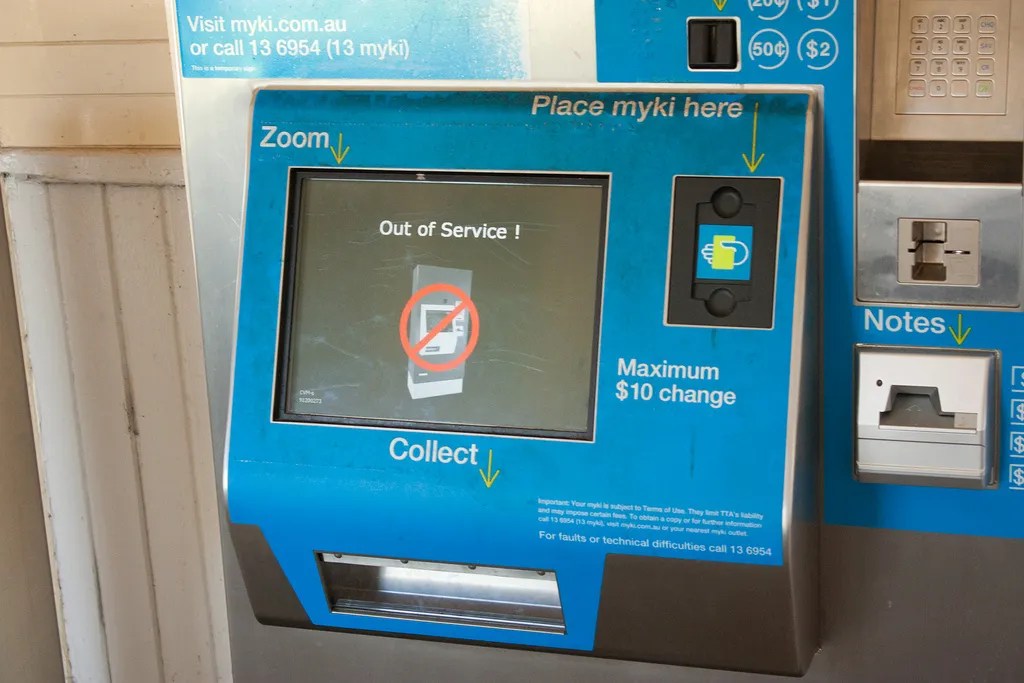
The phrase “fool me once, shame on you; fool me twice, shame on me” perfectly captures the public and political frustration surrounding Victoria’s public transport ticketing history.
The Department of Transport and Planning (DTP) repeated almost the exact same mistakes in 2023 that led to the original myki disaster in 2005.
The Victorian public is again on the hook. This time for $136.8 million, 25% cost blowout and an 18-month delay. The upgraded system will cost $0.26 for every $1 collected. The public deserves real answers.
Google backgrounder
The upgrade of Victoria’s myki ticketing system to a modern, tap-and-go contactless system has experienced significant financial and timeline blowouts, with the project now facing an 18-month delay and a $136.8 million cost increase. [1, 2]
Here are the key details regarding the project status as of March 2026:
- Total Blowout Amount: The cost of the overhaul has increased by approximately $137 million (roughly 25 per cent) over its initial budget.
- Total Project Cost: The Auditor-General report estimates the total cost of the 15-year contract to overhaul and run the system is now roughly $2.8 billion.
- Delayed Rollout: While trials began in 2025, the full rollout, including concession fares and complete ticketless functionality for all commuters, is delayed until 2027.
- Cause of Issues: A VAGO audit found the Victorian transport department “ignored risks” and accepted an unrealistic timeline, leading to contract disputes with vendor Conduent.
- Operational Cost: Reports suggest the new system is expected to consume 26¢ of every $1 it collects in fares, causing concerns about long-term value for money. [2, 3, 4, 5]
The project, which is intended to allow passengers to pay with credit cards or phones, is designed to replace the ageing existing myki system. [6, 7, 8]
The Victorian Auditor-General’s Office (VAGO) tabled its comprehensive “Modernising myki” report in parliament, revealing that the Department of Transport and Planning (DTP) signed a contract with an unrealistic timeline, ignored major project risks, and failed to prove value for money. [1, 2, 3, 4]
The specific findings from the report highlight several critical failures in procurement and delivery:
⚙️ Ignoring Risk and Postponing Issues [4]
- Unrealistic Deadlines: DTP received expert advice before signing the contract that vendor Conduent’s delivery schedule was “overly optimistic” and lacked detail, but chose to sign it anyway.
- Deferred Disputes: DTP failed to resolve known contract issues before signing, deferring the work and causing immediate contract standstills and a total project reset.
- Delayed Code Handovers: The department was slow to hand over source code from the legacy myki system, which the contractor needed to keep old and new readers operating side-by-side. [1, 5]
💰 Value for Money “Unclear”
- Inflated Operational Costs: The upgraded system is projected to cost 26¢ for every $1 collected in fares. DTP originally received internal advice that a modern system should cost less than 10¢ per dollar.
- Unverified Benefit Metrics: VAGO noted the department lacked a proper benefit management plan. DTP relied on anecdotal data from New South Wales to claim the system would cut fare evasion by 35% and concession fraud by 50% without solid local proof.
- Squeezed Capital Budget: The capital budget to build the platform spiked from $544 million to $680 million. This covers the new build and temporary old-system maintenance but excludes primary department wages and strategy costs. [1, 2, 6, 7]
⏳ Future Execution Risks
- Lack of Planning for Complex Phases: While the system is hitting its newly reset timelines, VAGO warned that complex upcoming phases—like migrating concession fares (which make up a third of all users)—lack detailed planning.
- Policy Pauses: Work has occasionally paused to assess shifting state policies, such as proposed free travel for teenagers, adding risk to future rollouts. [1, 2]
[7, 8, 9]
[1] https://www.parliament.vic.gov.au
[6] https://www.audit.vic.gov.au
[8] https://www.audit.vic.gov.au
[9] https://www.parliament.vic.gov.au
The original myki ticketing rollout project, which began in 2005 to replace Melbourne’s old Metcard system, is widely regarded as one of Victoria’s most notorious infrastructure and IT failures. [1, 2, 3, 4]
A retrospective analysis shows the project suffered from extreme delays and nearly tripled its initial budget: [5]
💰 Budget Blowouts
- Initial Cost Projection: The system was originally budgeted at $521 million (with $494 million awarded to the initial developer, Kamco).
- Final Lifetime Cost: Over its first decade of development and operation, the total cost blew out to approximately $1.5 billion.
- Transition Expenses: The budget expanded significantly because the state was forced to pay millions to keep the legacy Metcard system operating in parallel for years longer than planned. [2, 3, 4, 5, 6, 7]
⏳ Rollout Delays
- Original Launch Date: The smartcard system was legally scheduled to be fully operational by March 2007.
- Actual Delivery: The rollout was plagued by a three-year delay. It didn’t launch on Melbourne trains until late 2009, and Metcard wasn’t officially switched off until December 2012. [1, 6, 7, 8]
🛑 What Went Wrong?
According to a previous VAGO Operational Effectiveness Investigation and parliamentary inquiries, the original project collapsed under several unique pressures:
- Poor Requirements Definition: The initial scope from the state government was overly complicated and vaguely specified. Developers tried to build a highly customized system to fit Melbourne’s complex zone-based and multi-modal fare system from scratch rather than buying an established “off-the-shelf” system like London’s Oyster card.
- Vendor Buyout: The original consortium, Kamco, severely under-delivered and bled money. It was ultimately bought out by Japanese tech firm NTT Data in 2010 to salvage the project.
- Underestimated Risks: Cross-agency oversight was highly deficient, meaning severe technical flaws in the scanning speed of the readers and card-processing backends weren’t identified or mitigated until after thousands of devices were already manufactured and installed. [6, 8, 9, 10, 11]
[1] https://www.audit.vic.gov.au
[3] https://www.innovationaus.com
[7] https://beautifulaltona.com.au
[10] https://www.audit.vic.gov.au
The Department of Transport and Planning (DTP) structured the current $1.7 billion, 15-year contract with US-based vendor Conduent Business Services specifically to avoid the massive infrastructure traps of the original 2005 myki rollout. [1, 2, 3, 4, 5]
Instead of building a highly customized, slow-to-adapt card system from scratch, the new contract is built on a modern Account-Based Ticketing (ABT) model. [2]
The key structural shifts designed to protect the state—along with the loopholes that still triggered the recent blowout—include:
📱 1. Account-Based vs. Card-Based Architecture
- Old Mistake: The original system stored fare data directly on the microchip of the physical myki card. Changing a rule required updating thousands of physical card readers across Victoria, crippling the rollout speed.
- New Structure: The contract uses an “off-the-shelf” central server model. Devices act simply as scanners. The calculation happens in the cloud, allowing the state to integrate mobile wallets, debit cards, and wearables seamlessly without replacing hardware every time a policy changes. [1, 6, 7, 8]
🔄 2. A Staged “Phased-Rollout” Delivery Model
- Old Mistake: The 2005 project attempted a “big bang” approach, trying to shift the entire state network simultaneously, resulting in millions wasted running the old Metcard system concurrently when bugs appeared.
- New Structure: The contract legally enforces a four-phase staggered rollout between 2025 and 2028:
- Phase 1: Physical replacement of 23,000 readers (compatible with old cards).
- Phase 2: Activating tap-and-go for full-fare passengers.
- Phase 3: Integrating regional lines and concession fares.
- Phase 4: Transitioning existing myki cards to the cloud (“card-flipping”) and retiring the old system.
- The Safety Net: The contract allows a “roll-back” function, meaning if a phase fails or reveals a critical security flaw, the software can be reverted immediately without bringing down the whole transit network. [6, 7, 9, 10, 11, 12]
⚖️ 3. Procurement Competition and Consolidated Operations
- Old Mistake: The initial system fragmented responsibilities between the Transport Ticketing Authority (TTA) and the vendor, blurring accountability.
- New Structure: DTP bundled both operations and modernization into one single contract. Conduent is fully responsible for running the legacy myki system while constructing the new system. If the new system delays, they bear the operational burden of keeping the old equipment functioning. [6, 8, 13]
⚠️ Why Did it Still Blow Out?
Despite these structural safeguards, the Auditor-General’s report noted that DTP introduced major vulnerabilities during contract execution: [12, 14]
- Over-Optimistic Schedule Deadlines: DTP accepted a highly aggressive timeline from Conduent to hit an artificial launch window, ignoring independent warnings that the schedule lacked engineering depth.
- Legacy Code Ownership Disputes: The contract failed to cleanly resolve intellectual property rights over the legacy myki source code before signing. This caused an immediate six-month standstill as Conduent could not access the data required to integrate old cards into the new readers.
- Concession Complexity: The contract requires over 150 separate digital API integrations with various state and federal databases to verify student, senior, and veteran concession entitlements automatically. DTP structured the deal before mapping these connections out, heavily delaying Phase 3. [6, 7, 10, 11, 12]
[1] https://www.premier.vic.gov.au
[2] https://www.busnews.com.au
[3] https://www.themandarin.com.au
[6] https://www.audit.vic.gov.au
[8] https://www.audit.vic.gov.au
[9] https://www.audit.vic.gov.au
[10] https://www.theguardian.com
[11] https://www.theguardian.com


Leave a Reply