- Public transport and ticketing
- Social housing and homelessness services
- Prisons and correctional facilities
- Residential and foster care
- Arterial roads and tollways
- Land registry, titling and valuations
- Vehicle registration
- Electricity generation, transmission and retail distribution
- Gas and fuel
- State Insurance Office and Workcover
- State forestry
- Port of Melbourne
- Births, Deaths & Marriages
- State Trustees
- Building approvals and site inspections
- EPA, Worksafe, Food safety, Taxis & Rideshares, Gaming machines, Livestock & agricultural biosecurity appointed auditors and inspectors
- Public Sector and Financial Performance Auditing outsourced by Victorian Auditor General to professional services firms
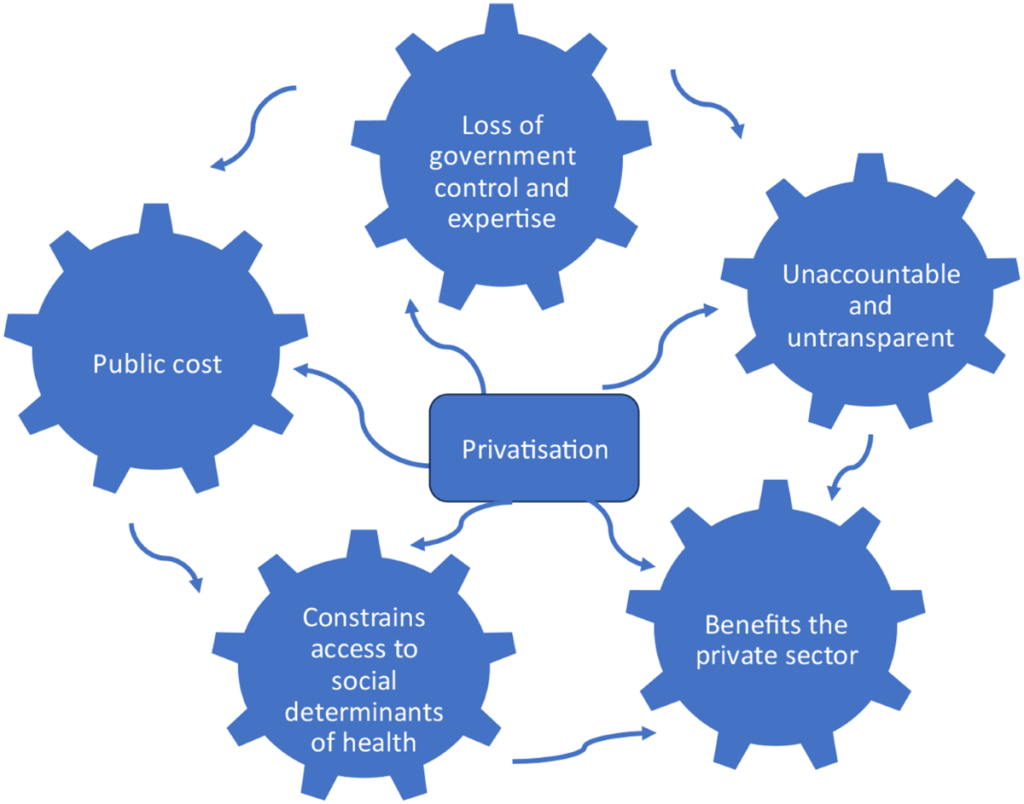
Since the 1990s, successive Victorian governments have corporatised, commercialised and privatised a huge swathe of previously publicly owned assets. Even core regulatory functions, like VicRoads, are now run for-profit by private companies. In many cases, a one off payment was used to pay down debt or fund other infrastructure. In other cases, the outsourcing to non-government organisations means that the state pays, but doesn’t control. We now have a government sector that has no assets left to strip and massively diminished accountability. Worse still, the public still pays the price, but with private consortiums reaping the benefits ahead of the public good. Public servants manage the contracts, not the public policy outcomes.
Google background
The Victorian State Government has structurally marketised, privatised, or outsourced several core policy portfolios to private corporations and the non-profit charity sector.
While the state retains supreme regulatory oversight, it relies on competitive commercial markets and outsourced contract arrangements to deliver critical infrastructure, public housing support, social services, and transport logistics. [1]
🚍 1. Public Transport and Ticketing Networks [2]
While the train tracks, tram lines, and road corridors remain public property, the day-to-day operations and ticketing networks are fully outsourced to private multi-national consortiums.
- Metropolitan Rail and Trams: Operation of Melbourne’s entire metropolitan train network is outsourced via multi-billion-dollar franchise contracts to Metro Trains Melbourne (MTM) (a private consortium led by MTR Corporation). Similarly, the tram network is operated by Yarra Trams (run by the private transport giant Keolis Downer). [3]
- The Myki Ticketing System: The state’s automated smartcard public transport ticketing system is entirely managed and operated under a long-term, multi-million-dollar commercial contract by the private US tech firm Conduent.
- Metropolitan Bus Franchises: Massive chunks of Melbourne’s bus routes are outsourced to private commercial transit operators (such as Kinetic and Ventura) who manage the vehicles, routes, and depot staff under strict performance-based state contracts.
🏡 2. Public Housing Management and Homelessness Services
Victoria has progressively shifted its social housing strategy away from traditional department-built public housing toward a marketised “Community Housing” model.
- Community Housing Providers (CHPs): Under major infrastructure pipelines like the Big Housing Build, the state transfers public land and billions in capital directly to non-profit charitable CHPs (such as HousingFirst, Launch Housing, and Haven; Home, Safe). These charities legally own or manage the residential assets, handle tenancy agreements, and collect rents. [4, 5]
- Homelessness and Crisis Support: The state Department of Families, Fairness and Housing (DFFH) does not operate crisis shelters or frontline youth homelessness centers. This work is 100% outsourced to large charitable networks (such as the Salvation Army, VincentCare, and Sacred Heart Mission) funded via rolling state service agreements.
🧑⚖️ 3. Prisons and Correctional Facilities
Victoria operates a hybrid correctional system where a significant percentage of the state’s maximum and medium-security prison populations are housed in entirely privatised facilities. [6]
- Private Prisons: Major high-capacity correctional institutions are fully owned and operated by multinational private security corporations under long-term state contracts. Examples include Ravenhall Correctional Centre (operated by GEO Group) and Port Phillip Prison (managed by G4S). These private operators are financially responsible for everything from physical security assets to inmate healthcare and rehabilitation programs. [7, 8, 9]
🩺 4. Out-of-Home Care and Child Protection Support
While child protection statutory investigations remain a legal function of state government officers, the actual care and housing of vulnerable children removed from their families is fully outsourced.
- Residential and Foster Care Services: The day-to-day management of residential care units (“resi care”) and the coordination of foster and kinship care networks are completely executed by independent non-profit charities and community service organizations (such as Berry Street, Anglicare Victoria, and MacKillop Family Services). The state provides indexed per-child funding packages to these charities to cover food, housing, and trauma-informed support staff. [10]
🛣️ 5. Arterial Roads and Tollway Infrastructure
The construction and ongoing commercial management of Melbourne’s high-capacity intra-city motorway grid are heavily marketised through long-term toll road concessions.
- Toll Road Operators: Major structural freight and commuter arteries—including the CityLink network and the massive EastLink corridor—are operated by private toll road corporations (such as Transurban and ConnectEast). These companies fund the capital asset upgrades in exchange for the legal right to collect direct toll revenue from Victorian motorists for decades.
[1] https://haytonkosky.com.au
[4] https://www.audit.vic.gov.au
[5] https://www.cityrotaryperth.org.au
[8] https://journals.sagepub.com
[9] https://www.tandfonline.com
The Victorian State Government has fully or partly privatised several other massive asset portfolios, regulatory bodies, and commercial services. [1, 2]
These transformations shifted the state’s role from a direct service provider to a remote regulator, unlocking quick capital to fund metropolitan infrastructure [2] while passing operations to private corporations or specialized non-profit entities. [3, 4]
📋 1. Land Registry, Titling, and Valuations (Partly Privatised) [5, 6, 7]
The commercial processing of Victoria’s land titles, property transfers, and registry data represents a highly lucrative public asset transaction. [8]
- The Privatisation: In 2018, the state government executed a $2.86 billion, 40-year concession deal, outsourcing the commercial operations of Land Use Victoria to a private consortium led by First State Super (now Aware Super). [9, 10]
- The Structure: The private operator collects the commercial fees for processing land titling, registry searches, and property valuations. The state retains legal ownership of the underlying data and continues to strictly regulate property transaction fee caps to protect consumers from price gouging. [11, 12]
🚗 2. Vehicle Registration, Licensing, and Custom Plates (Partly Privatised) [13]
To unlock capital for infrastructure upgrades, the state marketised the back-of-house commercial operations of its peak transit authority.
- The Privatisation: In 2022, the Victorian Government finalized a $7.9 billion, 40-year concession agreement, partly privatising the joint registration, licensing, and custom plate business of VicRoads. The winning private consortium includes Macquarie Asset Management, Aware Super, and AustralianSuper. [14, 15, 16, 17, 18]
- The Structure: The private consortium manages the IT databases, custom plate sales, and registration processing systems, pocketing a share of operational revenues. The state retains total ownership of all personal citizen data, continues to set all statutory licensing fees, and maintains control over road safety policy and driver testing standards. [19, 20, 21]
⚡ 3. The State Electricity Grid and Generation (Fully Privatised)
The structural breakup and full sale of Victoria’s electricity generation, transmission, and retail distribution systems during the 1990s remain one of the most comprehensive privatisations in Australian history.
- The Privatisation: The historic State Electricity Commission of Victoria (SECV) was broken up and sold to private international utility corporations and energy giants. [22]
- The Structure: The high-voltage transmission lines are owned entirely by the private corporation AusNet Services, while localized regional power distribution grids are split among private monopolies (such as Powercor, CitiPower, and United Energy). Generation assets (like the Loy Yang power stations) are owned by private energy retailers like AGL and Alinta Energy. The state’s role is restricted to a remote legislative referee acting via the Essential Services Commission (ESC). [23, 24]
🏥 4. The State Insurance Office & WorkCover Claims (Outsourced Execution)
While the statutory frameworks for workplace safety and personal injury insurance are managed by state authorities, the actual processing of financial claims is heavily outsourced to the private financial sector.
- The Structure: WorkSafe Victoria sets the state’s workers’ compensation policies and collects employer premiums. However, it does not manage individual worker injury claims directly. Instead, WorkSafe contracts out the day-to-day management of insurance claims to private commercial insurance corporations (such as Allianz, EML, and Gallagher Bassett) who act as the state’s official service agents. [25, 26]
🪵 5. State Plantations and Commercial Forestry (Fully Privatised)
Victoria’s historical state-owned timber plantations were systematically transferred into the private commercial market to remove the state from logging operations.
- The Privatisation: The state’s commercial plantation business, Hancock Victorian Plantations (HVP), was fully privatised. HVP holds long-term crown land leases managing vast expanses of pine and eucalyptus plantations across regional Victoria.
- The Structure: HVP operates as a purely private commercial agribusiness enterprise supplying domestic timber mills, while the state government’s statutory authority, VicForests, has been steadily wound down following native timber logging bans, leaving the commercial forestry sector entirely marketised. [27]
[1] https://victoriangenealogy.com.au
[4] https://pubadmin.institute
[6] https://haytonkosky.com.au
[9] https://haytonkosky.com.au
[10] https://www.parliament.vic.gov.au
[11] https://www.audit.nsw.gov.au
[12] https://www.parliament.vic.gov.au
[16] https://www.whichcar.com.au
[17] https://infrastructurepipeline.org
[18] https://www.innovationaus.com
[19] https://www.macquarie.com
[20] https://infrastructurepipeline.org
[21] https://www.insuredaily.co.uk
[22] https://ipa.org.au
[24] https://ipa.org.au
[25] https://www.audit.vic.gov.au
[27] https://www.theaustralian.com.au
The modern strategy for Victorian government agencies has shifted from total sale to “commercialisation” through long-term joint ventures and corporate models. By packaging these administrative bodies as investment opportunities, the state secures short-term cash injections to manage its public debt while private partners gain guaranteed, long-term revenue streams. [1, 2, 3]
The current privatisation and commercialisation status of these major administrative agencies includes:
VicRoads (Registration and Licensing)
- The Model: A 40-year joint-venture concession finalized in 2022 for $7.9 billion. [2, 4]
- The Reality: The consumer-facing transactional side (processing licences, custom plates, and vehicle registrations) is run by a private consortium. The state government retains ownership of the data, core rules, and pricing controls. Critics note that performance targets for the private operator were lowered shortly after the deal. [2, 4, 5, 6, 7]
- What Remained Public: VicRoads heavy infrastructure planning, road construction, and maintenance were split off and absorbed back into the fully public Department of Transport and Planning. [8, 9]
Registry of Births, Deaths and Marriages (BDM)
- The Model: BDM is undergoing targeted commercialisation and IT outsourcing. [2, 3]
- The Reality: Following the blueprint used for VicRoads, the government opened negotiations to transition BDM into a private-partnership model. While the government insists the registry “will not be fully privatised,” private equity models are being leveraged to overhaul BDM’s legacy IT systems and back-end processing in exchange for a share of certificate revenue. [2, 3, 10]
- The Backlash: Public service unions and crossbench MPs have strongly opposed the move. They cite massive data privacy risks involved in handing sensitive personal identity records over to profit-driven corporate interests. [11, 12, 13, 14]
State Trustees
- The Model: State Trustees operates under a unique state-owned corporation model.
- The Reality: Unlike standard public trustee offices in other Australian states, State Trustees was transformed into a state-owned company with strict commercial objectives. It is technically owned by the government and receives public funding to manage vulnerable clients under Community Service Agreements. However, it must function as a self-sustaining business.
- The Critique: A major Victorian Ombudsman investigation revealed that this commercial pressure created structural conflicts. The drive to contain operational costs directly led to service constraints, severe communication breakdowns, and financial management issues for the vulnerable Victorians relying on them. [15, 16, 17]
[6] https://www.canberratimes.com.au
[7] https://infrastructurepipeline.org
[9] https://vic.liberal.org.au
[10] https://www.itnews.com.au
[12] https://www.governmentnews.com.au
[13] https://cpsuvic.org
[14] https://www.theguardian.com
[15] https://www.ombudsman.vic.gov.au
[16] https://www.statetrustees.com.au
[18] https://www.vpsc.vic.gov.au
[19] https://www.vicroads.vic.gov.au
The transition of regulatory enforcement and physical inspection services to the private market represents a distinct pillar of Victorian privatisation. Rather than leasing static administrative infrastructure, the government has repeatedly “marketised” statutory compliance by licensing private individuals and businesses to act as the state’s de facto inspectors.
While the state government formally retains macro-level regulatory frameworks, day-to-day enforcement, site audits, and safety certifications are heavily outsourced to private, profit-driven operators.
The most prominent privatised regulatory and inspection services in Victoria operate across several key sectors:
1. Building Approvals and Site Inspections (The Certifying Market)
Following national competition reforms initiated in the 1990s, Victoria pioneered the privatisation of statutory building approvals. [1]
- Private Building Surveyors: In Victoria, a property developer or homeowner is not required to go through a local municipal council to get a building permit or structural inspection. Instead, they can hire a private, corporate building surveyor registered with the state. [1, 2, 3, 4]
- The Reality: These private surveyors possess the legislated power to issue building permits, conduct mandatory stage inspections (foundations, framing, etc.), and issue final Occupancy Permits. [2, 5, 6, 7]
- The Conflict and Reform: This structural setup creates an inherent conflict of interest: private inspectors are financially reliant on the commercial builders they are meant to police. Following high-profile defect scandals across Australia, the state stepped in with the Building and Plumbing Administration and Enforcement Act 2026, dissolving old frameworks to create a unified public watchdog—the Building and Plumbing Commission (BPC)—equipped with stronger modern powers to reign in private practitioner failures. [8, 9, 10]
2. Vehicle Roadworthy Testing (Licensed Private Operators)
The state’s automotive safety checking system functions as a completely distributed private market.
- VicRoads Licensed Vehicle Testers: The Victorian Government does not operate public vehicle inspection bays. Instead, checking if a car is safe for the road is outsourced entirely to authorised private mechanics and commercial garages. [11, 12]
- The Reality: The state grants specific private businesses the statutory power to issue official Roadworthy Certificates (RWC). The private mechanic acts as the state regulator’s eyes on the ground, charging consumers directly for the inspection and generating private revenue from any repair work required to pass the test. [11]
3. Environmental and Contaminated Land Auditing
Environmental safety oversight operates via a hybrid corporate market rather than direct agency inspections.
- EPA Appointed Environmental Auditors: While the Environment Protection Authority (EPA) Victoria acts as the overarching legal authority, the highly specialized task of evaluating heavily contaminated industrial land is outsourced.
- The Reality: The EPA explicitly appoints senior private environmental consultants to act as independent auditors. These private professionals issue legally binding “Environmental Audits” or “Statements of Environmental Audit” that developers must obtain before a site can be rezoned or built upon. [13, 14, 15, 16]
4. Workplace & Specialized Infrastructure Inspections
- High-Risk Plant and Equipment: For complex heavy machinery—such as tower cranes, commercial escalators, and major amusement rides—WorkSafe Victoria framework dictates that safety checks must be performed by private “competent persons” or independent structural engineering firms. The private operator signs off on the engineering integrity, which the employer then submits to the government regulator.
- Electrical Safety Inspectors: While EnergySafe Victoria (ESV) is the state’s energy safety regulator, mandatory testing of complex electrical installations must be verified by private Licensed Electrical Inspectors (LEIs) before the grid operator will connect power to a property. [17, 18, 19]
[2] https://ownerinspections.com.au
[4] https://sqmarchitects.com.au
[7] https://www.audit.vic.gov.au
[8] https://www.planning.vic.gov.au
[11] https://www.autoguru.com.au
[12] https://roadworthyandyou.com.au
[13] https://www.alphaenvironmental.com.au
[14] https://vgls.sdp.sirsidynix.net.au
[16] https://www.adelaidenow.com.au
[17] https://www.ohsrep.org.au
[18] https://www.energysafe.vic.gov.au
[19] https://www.solarpermitsolutions.com
[21] https://descomconsultant.com.au
The strategy of converting public inspectors into a distributed market of private practitioners extends well beyond buildings and road vehicles. In Victoria, numerous high-stakes audit, safety, and certification functions are outsourced to state-approved private contractors who assess compliance on behalf of the government.
The other primary privatised inspection and audit services in Victoria are detailed below:
1. Food Safety Audits (High-Risk Businesses)
While local municipal councils employ Environmental Health Officers to check low-risk cafes, the highly technical auditing of high-risk commercial facilities is handled by the private sector.
- Private Food Safety Auditors: Under the Food Act 1984, Class 1 and Class 2 food businesses—such as hospitals, aged care facilities, child care centers, and complex food manufacturers—must undergo mandatory regulatory audits. [1, 2, 3, 4]
- The Reality: Instead of government inspectors, these facilities must hire a Department of Health-approved private food safety auditor. Private auditing firms (such as QMS Audits or Health Spectrum) issue the official compliance reports required to retain a commercial food license. [5, 6, 7, 8]
2. Commercial Passenger Vehicles (Taxis and Rideshare)
Ensuring that vehicles carrying the public are structurally sound has been entirely moved to commercial operators.
- Private Fleet Inspectors: Commercial Passenger Vehicles Victoria (CPVV) mandates that all rideshare vehicles (Uber, DiDi), luxury hire cars, and traditional taxis undergo annual safety audits. [9, 10]
- The Reality: These safety checks are completely outsourced to authorized commercial garages and specialized private inspection companies like RedBook Inspect or Road Safety Inspections. [9, 11]
3. Public Sector Financial & Performance Auditing
Even the mechanism used to audit the government itself has faced privatization. [12]
- The Outsourced VAGO Model: The Victorian Auditor-General’s Office (VAGO) is the state’s supreme public sector audit body. However, following structural changes that began during the Kennett era, VAGO does not maintain the internal staff required to execute every check.
- The Reality: A vast percentage of financial and performance audits for state departments, public hospitals, and universities are outsourced via public tender to the “Big Four” private accounting monopolies (PWC, KPMG, Deloitte, and EY). The private firms conduct the groundwork under contract, which the Auditor-General then tables in Parliament. [12, 13, 14]
4. Gaming and Liquor Compliance
- Gaming Machine Testing: Victoria’s multi-billion dollar electronic gaming machine (pokies) market is heavily regulated, but the software and hardware checking is outsourced. The state utilizes licensed Accredited Testing Laboratories (ATLs)—which are private, independent commercial entities—to audit and certify that poker machines comply with the state’s strict integrity and return-to-player laws before they hit venue floors.
5. Livestock and Agricultural Biosecurity
- Private Veterinary Inspectors: While Agriculture Victoria monitors the state’s farming borders, day-to-day disease testing, livestock export certifications, and market-access auditing are heavily reliant on state-accredited private veterinarians. These commercial vets act as authorized inspectors to verify biosecurity compliance for sheep, cattle, and grain industries.
[1] https://vmbusinessnetwork.com
[2] https://www.safefoodaustralia.com.au
[3] https://www.surfcoast.vic.gov.au
[5] https://www.health.vic.gov.au
[6] https://www.safefood.vic.gov.au
[9] https://www.redbookinspect.com.au
[10] https://www.geelongrwc.com.au
[11] https://www.busvic.asn.au
[12] https://www.afr.com
[15] https://www.cityofpae.sa.gov.au
[16] https://onlinelibrary.wiley.com
Beyond the administrative, utility, and regulatory services already discussed, several other major assets and specific industry-facing agencies have transitioned out of direct public management. These fall into the distinct categories of commercial forestry, housing, finance, and specialized land development. [1]
The primary remaining sectors that have undergone privatisation, corporatisation, or commercialisation in Victoria are organized below:
1. Forestry, Plantations, and Crown Land Real Estate
Victoria’s natural resource assets underwent early structural sales, followed more recently by full structural phase-outs that redirected public roles to the private market: [2, 3]
- Victorian Plantations Corporation (VPC): In 1998, the Kennett government completely privatised the state’s commercial timber plantation authority for $550 million. The perpetual right to manage approximately 168,000 hectares of softwood and hardwood crops was sold to the Hancock Timber Resource Group, establishing what is now known as HVP Plantations (Hancock Victorian Plantations). [2, 4, 5]
- VicForests: Following the state government’s decision to ban native forest logging, the state-owned statutory logging enterprise was systematically wound up. The residual commercial thinning trials, firebreak clearings, and remaining commercial forestry management were largely shifted to private contractors, non-government foundations, and First Nations corporate entities. [3]
2. Finance, Insurance, and Wealth Funds
Like public utilities, the state’s banking and insurance institutions were dismantled to generate immediate capital injections: [6, 7]
- State Bank of Victoria: In 1990, following the financial collapse of its merchant banking arm (Tricontinent), the iconic state-owned bank was sold to the federally owned Commonwealth Bank of Australia (CBA) for $1.6 billion (before CBA itself was subsequently privatised). [6, 8, 9]
- State Insurance Office (SIO): Victoria’s state-owned general insurance agency was completely privatised in 1992, with its commercial insurance lines sold off to private providers like GIO Australia. [6]
- Snowy Hydro Limited: In 2018, the Victorian Government sold its entire 29% equity stake in the Snowy Hydro scheme to the Federal Government for $2.07 billion, using the funds to bankroll metropolitan transport infrastructure projects. [1, 10, 11]
3. Public Housing and Property Development
The state transitioned from a traditional provider of public housing blocks to a commercialised, market-facing development model: [1]
- Development Victoria: Operating as a state-owned commercial corporation, this agency functions under a strict mandate to extract maximum commercial returns from urban renewal projects. It acts as a corporate property developer on government land, often partnering directly with private real estate firms to build profitable mixed-use developments.
- Public Housing Estate Transitions: The state has systematically utilized Public-Private Partnerships (PPPs) and ground-lease models to hand over the renewal and management of public housing estates to private community housing providers (CHPs) and institutional developers. Under these arrangements, private entities build and manage properties on public land under long-term commercial concessions. [1, 12, 13, 14]
4. Gaming and Entertainment Infrastructure
- Tabcorp Privatisation: In 1994, the state-owned Totalizator Agency Board (TAB)—which held a public monopoly over off-course betting and wagering—was corporatised and floated on the Australian Securities Exchange (ASX) as Tabcorp. This transferred the state’s gambling retail network entirely into the corporate sector. [6]
[1] https://static1.squarespace.com
[4] https://victoriasforestryheritage.org.au
[7] https://haytonkosky.com.au
[11] https://www.audit.vic.gov.au
[13] https://australianaviation.com.au
[14] https://www.weirfoulds.com
The privatisation, corporatisation, and commercialisation of Victoria’s public assets have been a flashpoint for intense political, economic, and social debate. Critics—including consumer advocacy groups, public sector unions, the Victorian Ombudsman, and independent economists—argue that while asset sales provide short-term cash injections for the state budget, they often result in higher consumer costs, reduced public accountability, and systemic service degradation.
The primary criticisms of Victoria’s privatised and commercialised models are grouped below:
1. Structural Loss of Public Accountability and Transparency
When a public service is transferred to a private consortium or corporate entity, it is frequently shielded from public scrutiny.
- The “Commercial-in-Confidence” Shield: Private operators of outsourced services (like VicRoads or the Land Titles Office) routinely use “commercial-in-confidence” legal clauses to withhold contract details, performance metrics, and financial audits from the public and journalists.
- Freedom of Information (FOI) Exemptions: In Victoria, purely private corporations and certain joint-venture partners are not subject to the same rigorous Freedom of Information Act requirements as government departments, making it exceptionally difficult to investigate service failures or data management.
2. Inherent Conflicts of Interest in Privatised Inspections
Outsourcing regulatory policing to profit-driven entities has created severe structural failures, particularly in safety-critical sectors.
- The “Client-Inspector” Loop: As seen in the building sector prior to the creation of the unified Building and Plumbing Commission, private building surveyors are paid directly by the property developers they are supposed to inspect. Critics argue this financial dependency creates a direct incentive to overlook non-compliance or structural defects to secure repeat corporate business.
- Up-selling Repairs: For vehicle roadworthy testing, allowing private mechanics to issue statutory safety certificates means the inspector stands to make a direct profit from the vehicle repairs required to pass the test, leading to widespread consumer distrust.
3. Increased Costs and Decreased Accessibility for Consumers
Monopoly assets that once operated under a public service mandate must prioritize shareholder returns once privatised.
- Surging Fees and Prices: Following the 1990s energy privatisation, Victoria experienced steep increases in electricity and gas retail prices, forcing the state to introduce heavily regulated safety nets like the Victorian Default Offer. Similarly, critics point out that commercialised administrative agencies face structural pressure to increase certificate and licensing fees to meet consortium profit targets.
- The Commercial Squeeze on Vulnerable Clients: A prominent Victorian Ombudsman investigation into State Trustees revealed that forcing a public welfare entity to act like a profit-driven corporation led to cost-cutting that directly harmed highly vulnerable clients through severe service delays and financial mismanagement.
4. Severe Workforce Casualisation and Wage Suppression
Privatisation has radically transformed public sector employment, shifting stable, career-oriented public service roles into the insecure private market.
- The Rise of Labour Hire: To bypass public sector headcount caps, government agencies spend hundreds of millions annually on private labour hire firms and contractors. Unions argue this creates a two-tiered workforce where contracted staff do the same work as public servants but with fewer protections, lower wages, and zero job security.
- Social Sector Underfunding: In the heavily outsourced social and disability sectors, non-government organizations (NGOs) and private providers operate on tight competitive margins. Critics argue this has led to systemic underpayment, high staff turnover, and an over-reliance on casual support workers, ultimately reducing the quality and continuity of care for NDIS participants and foster youth.
The historic rallying cry of “no taxation without representation” strikes at the absolute core of the modern critique against Victoria’s privatisation model.
When a democratically elected government sells or leases a public asset to a private entity, it creates a profound structural paradox. Citizens continue to pay for an essential service, but they lose their democratic leverage over how that service is run. This shift breaks the traditional “social contract” in several distinct ways:
1. The Taxation Paradox (Hidden Taxes)
Critics argue that the fees charged by privatised or commercialised monopolies function exactly like a mandatory tax, but without any legislative oversight.
- The Reality: You cannot choose to skip registering your car, updating your land title, or turning on your electricity. Because these services are mandatory for modern life, the fees charged by private consortiums (like the operators of VicRoads or the Land Titles Office) act as a de facto tax. [1]
- The Critique: Unlike a true government tax—which must be openly debated, voted on in Parliament, and justified to the electorate—these private fees are governed by commercial concession contracts. If a private consortium raises service fees to maximize shareholder returns, citizens are forced to pay without having any say through their elected representatives.
2. The Loss of Political Representation
In a traditional public service model, if an agency fails, citizens have direct democratic recourse. They can complain to their local Member of Parliament (MP), trigger parliamentary inquiries, or vote the governing party out of office.
- The Shield of Privatisation: Once a service is commercialised, ministers can legally and politically distance themselves from operational failures. When systemic delays or IT glitches occur within outsourced agencies, the government can deflect blame by labeling it an “operational matter for the private vendor.”
- Accountability Stripped: Because the private operators are ultimately answerable to their board of directors and institutional investors—not the Victorian voter—the public’s political representation is effectively severed.
3. Corporate Profits vs. Sovereign Debt
The slogan also highlights a deeper economic grievance regarding how state revenue is managed:
- The Setup: Public assets are often sold or leased under the guise of paying down state debt or funding new infrastructure.
- The Structural Flaw: This strategy exchanges a perpetual, reliable stream of public revenue for a one-off cash injection. Decades down the line, Victorian taxpayers find themselves paying higher user fees to international private equity firms and super funds, while the state budget faces structural deficits because those profitable revenue-generating assets are no longer publicly owned.
4. Taxation to Fund Corporate Failure
Finally, when privatised systems fail or collapse under their own commercial weight, the financial burden is almost always pushed back onto the taxpayer.
- The “Too Big to Fail” Bailout: Whether it is a privatised public transport operator requiring emergency state subsidies to stay afloat, or the creation of the brand-new Building and Plumbing Commission to fix decades of private inspection failures, taxpayers end up footing the bill to repair broken private markets.
- The Outcome: Citizens find themselves highly taxed to fund the regulatory cleanup of services they no longer collectively own or control.


Leave a Reply