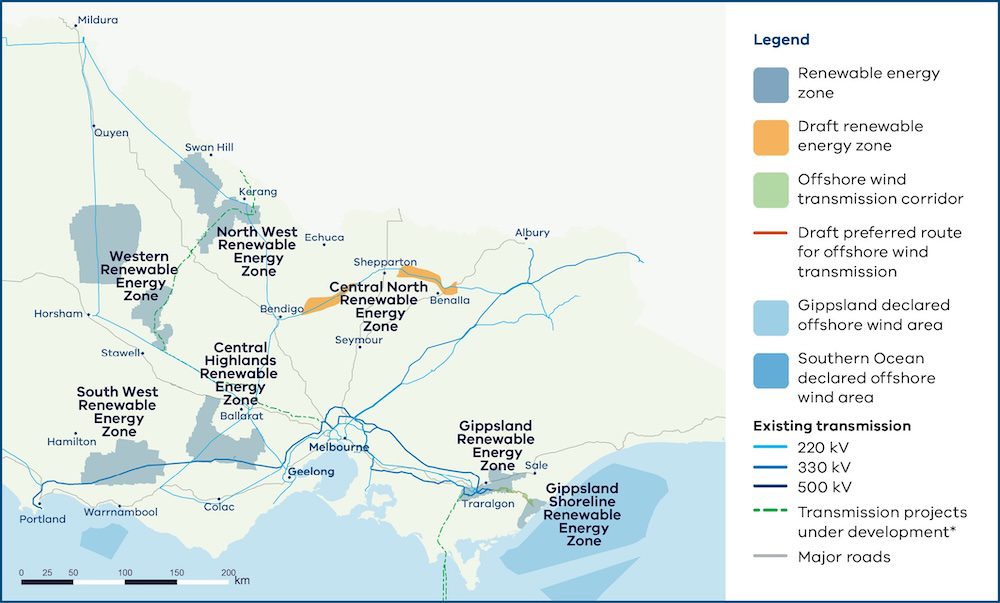
Victoria’s clean energy future depends on the communities hosting renewable energy projects and transmission infrastructure. Rebuilding trust and sharing the benefits must be the government’s first priority. /
We should celebrate Victoria’s progress in transitioning to low-carbon energy. But the government has failed to sell the benefits to regional communities impacted by Renewable Energy Zones (REZs). The government is now under a critical time crunch to bring projects online to offset Yallourn’s closure in 2028.
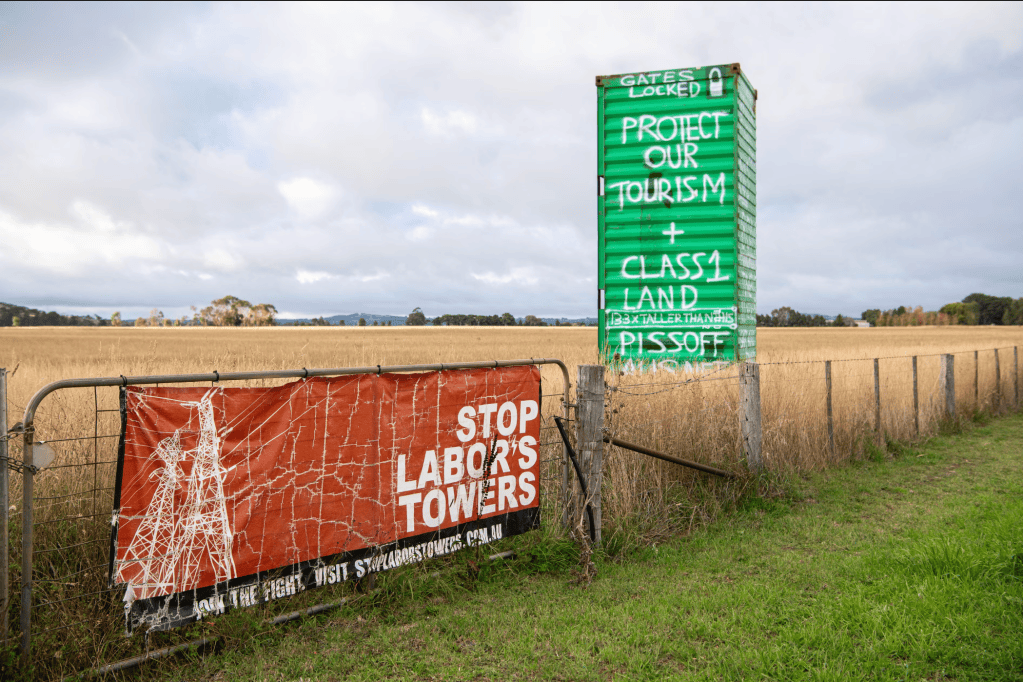
The government needs to rebuild trust with regional communities directly impacted by individual energy projects and the critical interconnectors.
The costs and risks of the energy transmission are growing while the social licence for the changes is weakening. Victoria’s coffers are empty, and the government’s credibility is shot. “Net Zero” is not an aspiration, but a rallying cry for reckless and short-sighted policy. Governments need to better explain how we got here and where we have to go next.
The Australian energy landscape is highly fragmented—split between states that retained full public ownership of their grids (NSW), states that fully privatised (Vic), and isolated micro-grids (SA). Victoria’s strategy is direct state co-investment to pull in private equity, backed by high-volume consumer rebates.
The Kennett Government’s full privatisation in the 1990s means Victoria cannot easily fund sole asset builds. Instead, it backs the revived public State Electricity Commission (SEC) with an initial $1 billion capital fund to act as an investment partner. This is paired with major state funding for consumer-side programs like the Victorian Energy Upgrades (VEU) network. This targeted strategy has successfully given Victoria the lowest wholesale power prices in the NEM.
Victoria’s Renewable Share is ~38% to 40% . Victoria historically relied entirely on highly emissions-intensive brown coal from the Latrobe Valley. Today, Brown Coal still generates roughly 55% to 60% of the state’s power. However, coal’s share is shrinking rapidly due to a massive influx of Rooftop Solar, Utility Solar, and Wind farms. Natural Gas fills a minor 3% to 5% peaking role.
Victoria currently presents the highest sovereign risk profile among the eastern states for both legacy and transition investors, due to the gas ban, the creation of the SEC, and pressure over land use for the Western Renewables Link.
The financial capital required to fully build out Victoria’s green network is staggering, totalling an estimated $35 billion in new investments by 2035.
The retirement of inflexible baseload coal shifts the systemic reliability focus entirely toward firming capacity to mitigate the unreliability of wind and solar through both “deep” and shorter-duration batteries.
Rapidly scaling diverse generation assets has sparked significant operational, environmental, and physical bottlenecks of solar “run off” and grid congestion.
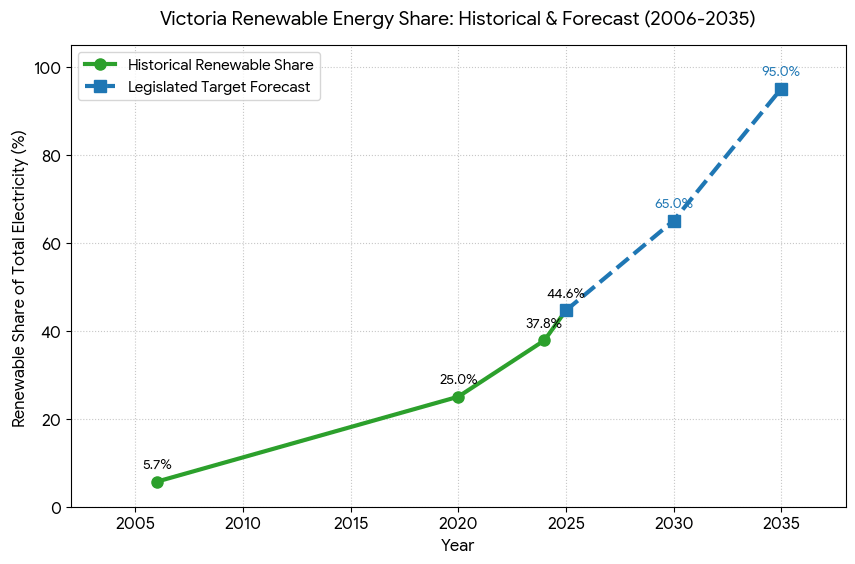
While Victoria has clear targets, independent analysis from the Victorian Auditor-General’s Office (VAGO) flags that matching future demand will grow increasingly complex. Systemic reliability out to 2030 hinges heavily on the Western Renewables Link and VNI West interconnectors finishing on time to prevent regional supply shortfalls when the Yallourn brown coal plant completely shuts down in mid-2028.
The energy market is in rapid transition, but the creation of renewables isn’t magic. We are all impacted by renewable energy land use, infrastructure investment & returns, and the long-term price of energy.


Leave a Reply